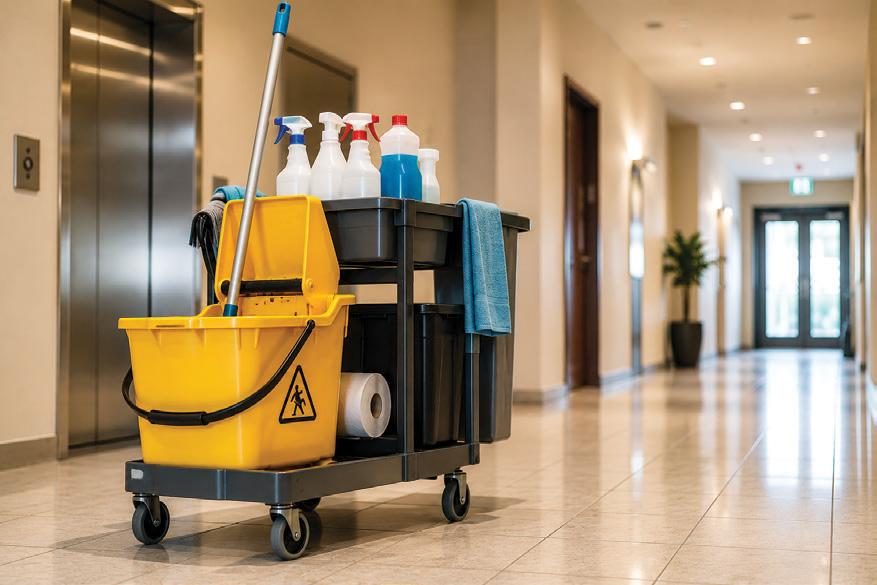
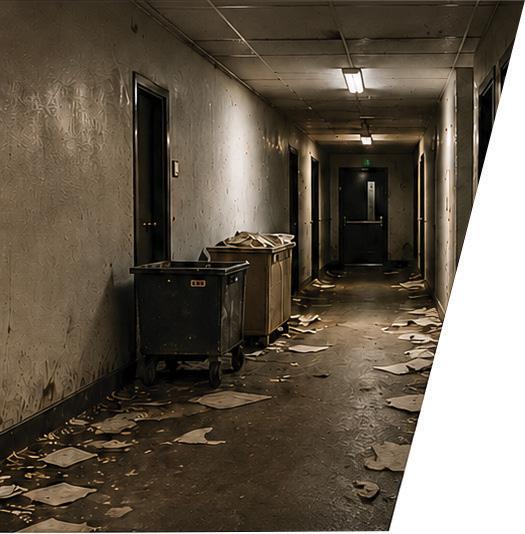
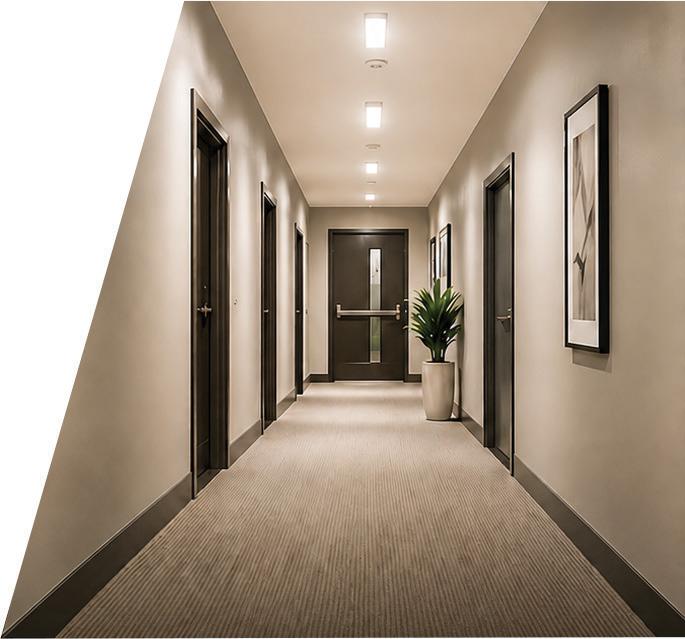
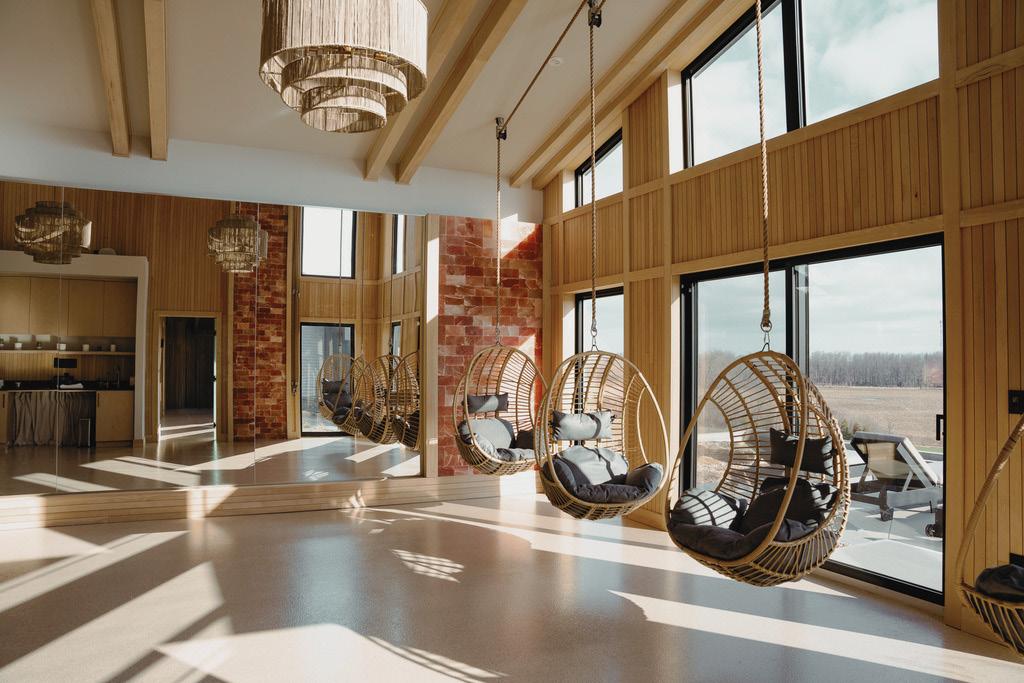
Coinamatic delivers fully managed laundry solutions that maximizes uptime, revenue, and resident satisfaction while removing operational burden.
With no upfront cost leasing options, property managers can easily convert their shared laundry to a fully connected Coinamatic managed solution.
Maximize Performance
ܣ Industry leading first-time fix rates
ܣ Reliable uptime driven by proactive service
Elevate Resident Satisfaction
ܣ Digital, convenient laundry experience
ܣ Fewer complaints
ܣ Faster issue resolution and refunds
Simplify Operations
ܣ Clear visibility through digital reporting
ܣ Comprehensive service support
ܣ Reduced workload for on-site teams
Increase Revenue
ܣ Optimized pricing and collections that capture more value
ܣ Data driven insights that continuously improve performance
PRESIDENT'S MESSAGE
TONY IRWIN President & CEO
Keeping up the momentum
As the Legislature rises for the summer, it is a good moment to reflect on the progress made over the past several months and the work still ahead of us.
This spring, FRPO continued to advocate for the practical, long-term solutions Ontario needs to support a healthier and more balanced rental housing system. I was pleased to be in Ottawa for the announcement of the Municipal Development Charge Reduction Program, an initiative FRPO strongly supports. Development charges remain one of the most significant barriers to getting new purpose-built rental housing built, and measures that reduce those costs can play an important role in helping more projects move forward.
I also had the opportunity to appear before the Ontario Legislature’s committee studying Bill 98, the province’s latest housing legislation aimed at accelerating homebuilding. In my remarks, I emphasized the importance of aligning housing, transit, and infrastructure, and ensuring that the systems supporting new development move together. For rental housing providers, stability, predictability, and timely approvals remain essential to attracting investment and maintaining the momentum needed to bring more homes to market.
That broader momentum is important. While some markets have seen modest short-term softening in rents and vacancies, Ontario’s long-term housing needs have not changed. We cannot allow temporary market corrections to distract from the structural supply challenge that remains in front of us. The province still needs a stable pipeline of new rental housing, supported by sound policy, reduced barriers, and a continued commitment to getting homes built.
As we head into the summer months, FRPO will continue to engage with government, industry partners, and stakeholders to reinforce these priorities and prepare for the return of the Legislature in the fall. Our message remains clear: purpose-built rental housing is an essential part of Ontario’s housing future, and keeping that sector strong benefits residents, communities, and the province as a whole.
Thank you, as always, for the professionalism and leadership you bring to this work every day. FRPO is proud to represent a sector that continues to play such a vital role in Ontario’s economic and social fabric.
Tony Irwin, President and CEO, FRPO
EVENTS
WOMEN IN RENTAL HOUSING LUNCHEON
Date and Time:
August 13, 2026 | 11:00 am – 2:30 pm
We are pleased to announce this year's Women in Rental Housing Luncheon will take place on Thursday, August 13 at the Old Mill. This event is proudly sponsored by Wyse Meter Solutions and brings together women in the industry to network, learn, and share their experiences. Speakers to be announced shortly, stay tuned!
$115 per person (members), $230 (non-members)
Buffet lunch is included with your registration.
CANADIAN APARTMENT INVESTMENT CONFERENCE
Date and Time:
September 9, 2026 | 7:00 am – 6:00 pm
The Canadian Apartment Investment Conference (CAIC) is Canada's leading event for the multiresidential real estate sector. It brings together more than 1,000 owners, developers, investors, lenders, property managers, and industry leaders to discuss trends shaping the rental housing industry. The conference features expert-led sessions on purposebuilt rental housing, investment strategies, financing, development, and the outlook for Canada's rental housing sector. The event also provides networking opportunities designed to foster new partnerships, facilitate deal-making, and connect decisionmakers from across the country. Click here for more information.
Note: This is not a FRPO event; please direct any inquiries to REForums@informa.com
FRPO MAC AWARDS
Date and Time:
November 25, 2026 | 5:00 pm – 9:30 pm
Save the date! The MAC Awards is the premier annual celebration for Ontario’s rental housing industry, bringing together over 1,200 attendees, from independent owners and operators to large thirdparty managers and REITs. This highly anticipated event honours outstanding achievement and elevates the standards of excellence championed by FRPO. We invite member organizations of all sizes to participate in this year’s MAC Awards and take advantage of the opportunity to showcase your leadership, innovation, and commitment to the rental housing sector. The deadline for award submissions is Monday, September 14, 2026 at 12:00 pm. Visit https://frpo.org/events/ frpo-mac-awards/index.html for more information.
Please check www.frpo.org regularly for newly added events.
MEMBER UPDATE UPDATE
NEW RENTAL HOUSING PROVIDER MEMBERS
Kindred Works
Ray Hashimi
647-505-5769 e. info@greenarcreno.com
Skyline is responding to demand with modern, purpose-built developments in small and mid-size markets
Rental demand is shifting across Ontario. Renters are renewing interest in smaller and mid-sized communities while looking for flexibility, convenience, and a better balance between lifestyle and cost. For rental housing providers, there is a clear opportunity to deliver new supply in stable, growing markets, while ensuring every part of a new rental development, from suite layouts to on-site amenities, reflects how people want to live today.
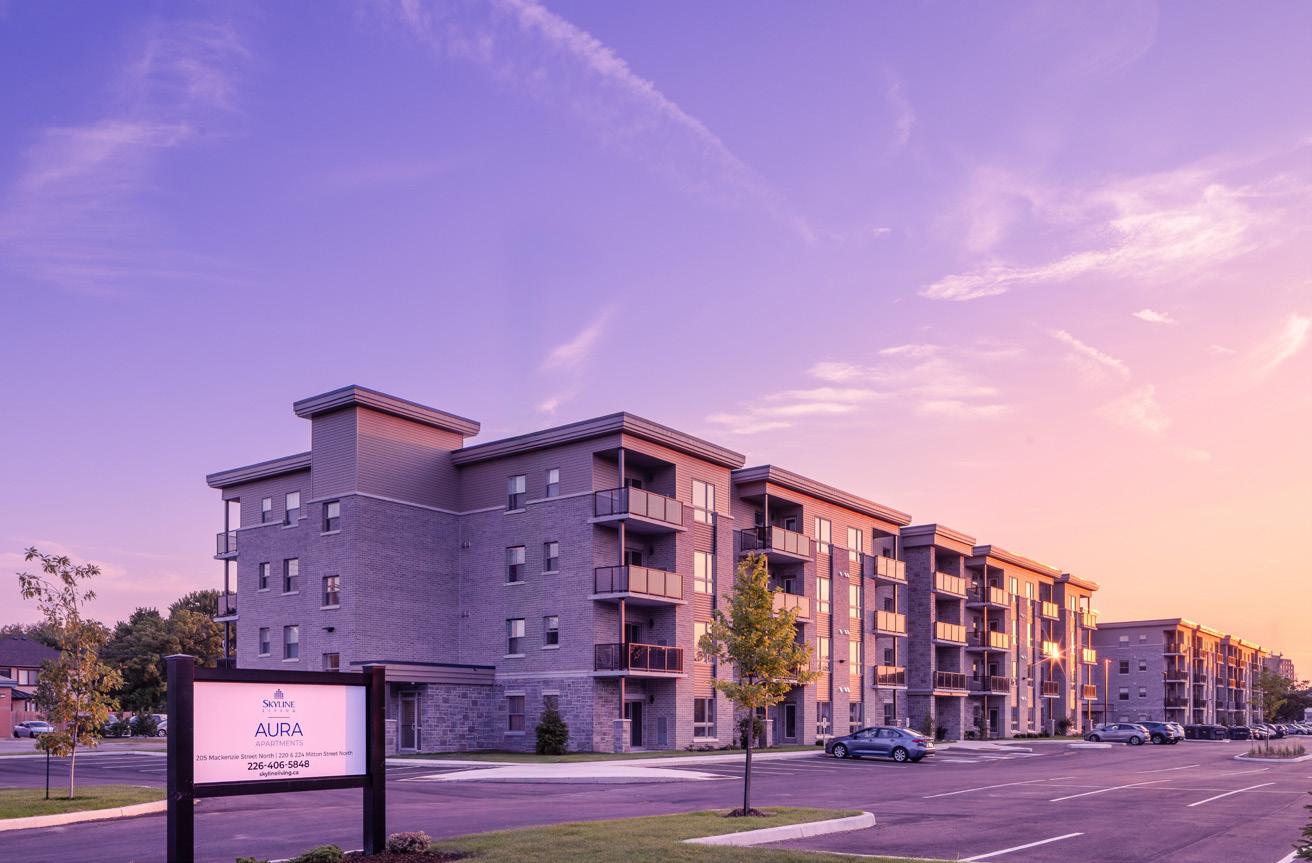
Three of Skyline’s newest developments, Lora Apartments in Quinte West (Trenton), Silvercreek Apartments in Collingwood, and Aura Apartments in Sarnia, are built with this in mind. Each brings purposebuilt rental housing to a growing market where it is in high demand and short supply, while focusing on what matters most to renters: comfort, convenience, and a place that feels like home.
Why renters are looking outside big cities
Communities like Trenton, Collingwood, and Sarnia are seeing higher rental demand as affordability pressures push people out of larger urban centres. Even so, renters’ expectations and preferences haven’t changed. They still want newly built apartments that offer contemporary, low-maintenance living without the responsibilities of homeownership.
The combination of lifestyle plus quality is what’s been missing in many smaller markets. New apartment communities like Lora, Silvercreek, and Aura are helping close that gap and meet market demands.
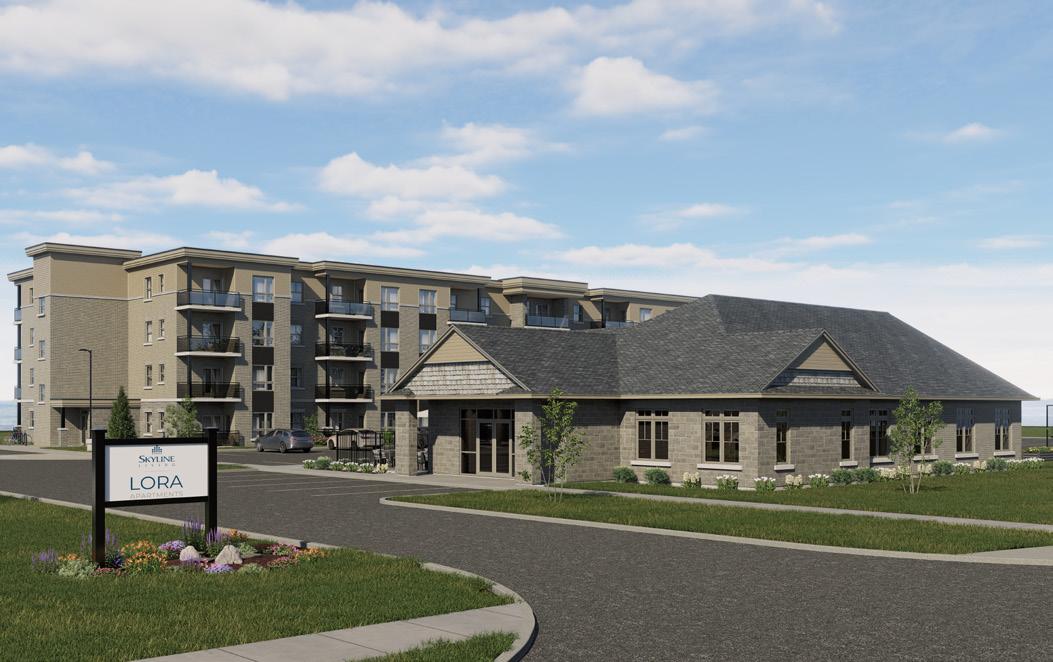
Lora Apartments, Trenton
Lora Apartments brings a new rental experience to Trenton, a community known for its natural beauty and close-knit feel. It’s designed for renters who want a quieter setting without giving up modern convenience.
RENTAL LIVING IS MOVING BEYOND THE BIG CITIES
Lora offers bright one- and two-bedroom suites with open-concept layouts, in-suite laundry, and private balconies that extend living space outdoors. Everything is designed to be straightforward, functional, and easy to settle into.
Lora’s shared spaces are built for daily use and fostering a sense of community. The on-site amenity building includes a fitness room, social lounge, billiards space, pickleball court, and community garden, giving residents places to unwind, stay active, or spend time with neighbours, all within steps of their suite.
Lora’s location adds another layer of appeal. Close to the Bay of Quinte, trails, and essential services, it offers access to both nature and everyday convenience. For many renters, it fills a simple gap: a new, professionally managed home with everyday essentials nearby, and without the upkeep of homeownership.
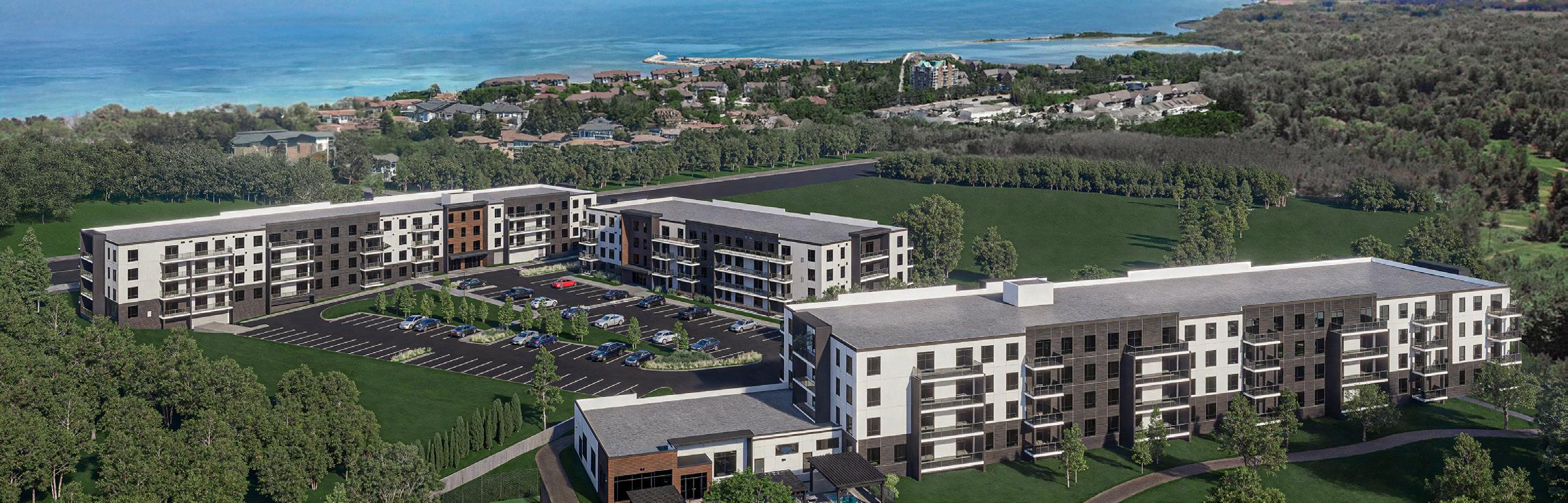
Silvercreek Apartments, Collingwood
Just east of Blue Mountain, Collingwood is already a year-round destination, and Silvercreek Apartments builds on that setting. It’s designed for renters who want their home to fit around an active, adventurous lifestyle.
The development includes one-, two-, and threebedroom suites with bright interiors, nine-foot ceilings, and layouts that are easy for residents to furnish and create a livable space from day one.
At the centre of the property is a shared amenity building that gives residents more space to enjoy beyond their suite. A fitness room, social spaces, pickleball court, outdoor patio, and hot tub give residents simple ways to relax at home after a busy day outdoors.
Silvercreek’s location is a major part of its appeal, offering direct access to trails, skiing, golf, and waterfront activities. Located close to the Cranberry Marsh, Georgian Bay, and Blue Mountain, it puts residents close to the lifestyle Collingwood is known for. At the same time, downtown shops, dining, and everyday essentials are just minutes away.
By Skyline in partnership with the FRPO Editorial Team
Aura Apartments, Sarnia, ON (artist rendering)
One Partner. Every Project.
From daily maintenance to unit renovations and capital projects, RONAPRO helps property management teams keep buildings running effectively.
Everything you need to maintain and improve your properties — all in one place:
Dedicated Pro Support
Expert support in-store and on-site.
Specialized Project Support
Special orders, construction take-off services, and estimating support are just a call away.
Reliable, On-Site Delivery
Powered by specialized fleet and an extensive distribution center network.
Charge Account For Pros
Manage authorized buyers with ease. Upon credit approval*.
*Upon credit approval. Certain conditions apply. For businesses only. In participating stores only. **Certain conditions apply.
Partner with RONAPRO and simplify the way you source, manage, and complete your projects.
Silvercreek speaks to renters who need more than an ordinary apartment. It offers rental options that fit into an active lifestyle, offering residents a way to fully experience Collingwood year-round.
Aura Apartments, Sarnia
Aura Apartments brings a more contemporary style of rental living to Sarnia’s core, offering residents a higherquality option in a well-connected part of the city.
The community provides modern suites that emphasize comfort. Its one- and two-bedroom layouts feature spacious interiors, functional design, and finishes like stainless steel appliances and in-suite laundry. All design details focus on making the space easy to live in and maintain.
Aura’s amenities support both daily routine and connection. Residents have access to a fitness room, social lounge with fireplace and billiards, private dining spaces, and an outdoor patio.
One of Aura’s strongest features is its location in the heart of Sarnia. Close to the St. Clair River waterfront, parks, and downtown, Aura allows residents to easily access trails, dining, shopping, and local events without needing to travel far.
Rental developments like Aura reflect how demand is evolving in smaller and mid-size communities like Sarnia, where residents are looking for newer, wellmanaged apartments that offer a more consistent, convenient living experience close to where they already live and work.
Designed for how renters live
Beyond the modern finishes and on-site amenities, renters are also looking for a reliable, well-managed place to live. That includes professional on-site staff, secure buildings, and responsive service that keeps daily life running smoothly.
At Lora, Silvercreek, Aura, and across all its rental communities, Skyline puts a strong emphasis on the renter’s overall experience as part of how each community is designed and operated.
“Today’s renters are not just looking for four walls; they’re looking for a home that fits into their daily
routines and supports how they already live,” said Maria Duckett, Skyline’s Vice President, National Property Operations.
“We focus on creating rental communities where people feel comfortable and connected. That comes through in the suite layouts and amenities, but also in the overall experience of living in the building. The smaller, day-today details carry just as much importance as how we’ve designed the property.”
According to Duckett, that includes everything from how residents are greeted by on-site staff to how quickly maintenance requests are handled, as well as the role of resident events and shared spaces in building an authentic sense of community.
“When people enjoy where they live, feel connected to it, and tell us they can’t imagine living anywhere else, that’s true community, and that’s what we have in mind at every step of designing and operating our properties,” she said.
Building for the future of rental housing
Developments like Skyline’s Lora, Silvercreek, and Aura aim to deliver on all fronts. They bring newer rental housing into markets where it hasn’t been widely available while giving residents something straightforward: a home that’s comfortable, well-located, and easy to live in.
For many renters, that’s the difference they’ve been waiting for.
Silvercreek Apartments Collingwood, ON (artist rendering)
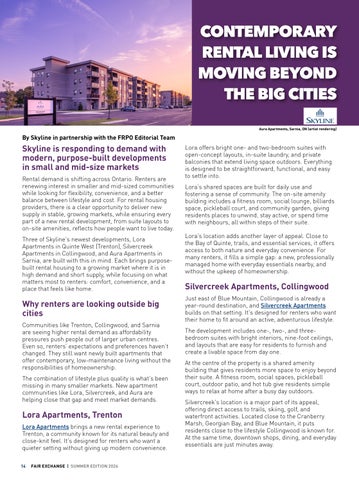
Lora Apartments Trenton, ON (artist rendering)
LET’S BUILD ONTARIO
As we move through the summer and begin looking ahead to a busy fall, Let’s Build Ontario continues to focus on strengthening the case for more rental housing and a better rental housing system for everyone in the province. As always, our goal is to keep the conversation centred on practical solutions, stronger communities, and the importance of a healthy purposebuilt rental sector.
Keeping rental housing in the municipal conversation
One important milestone on the horizon is Ontario’s municipal elections this October. Local governments play a major role in shaping how quickly and effectively new housing can be delivered, from approvals and planning to infrastructure and local costs. In the months ahead, we will be watching closely for opportunities to ensure rental housing gets the attention it deserves in municipal conversations, and that renters across the province have a chance to be part of that discussion through Let’s Build Ontario.
Launching our new renter experience survey
We have also launched our new renter experience survey with members and strongly encourage you to share it with your communities and residents. This initiative will help us gather valuable feedback and data that can be used to demonstrate the quality of rental housing experiences across the province and reinforce the positive role professional providers play in people’s lives. The more responses we receive, the stronger our ability to show policymakers and the public what Ontario’s professional rental housing providers are doing well every day.
A renewed call for member stories
Member stories remain one of the most effective tools we have to show the public, policymakers, and stakeholders what good rental housing looks like in practice. We are once again encouraging members to submit stories that highlight the many ways professional rental housing providers are supporting residents and communities across Ontario.
Whether it is a unique resident wellness program, a local charity partnership, or a major community event, these stories help bring the sector’s value to life. They show that our members are not just housing providers. They are community builders and trusted partners in the neighbourhoods they serve.
Get involved
Alongside this work, we continue to amplify the core messages at the heart of Let’s Build Ontario: Ontario needs more purpose-built rental housing, a stronger and more predictable development environment, and a rental housing system that works better for both residents and providers.
We invite all members to follow the campaign on social media, share our content with your onsite staff and residents, and continue contributing stories and survey participation opportunities where possible. Together, we can keep building a more informed, balanced conversation around rental housing in Ontario.
Visit letsbuildontario.ca to see the latest stories and submit your own.
Building
Structural
Waterproofing
Caulking
Masonry
Protective
Custom
G E N E R A L
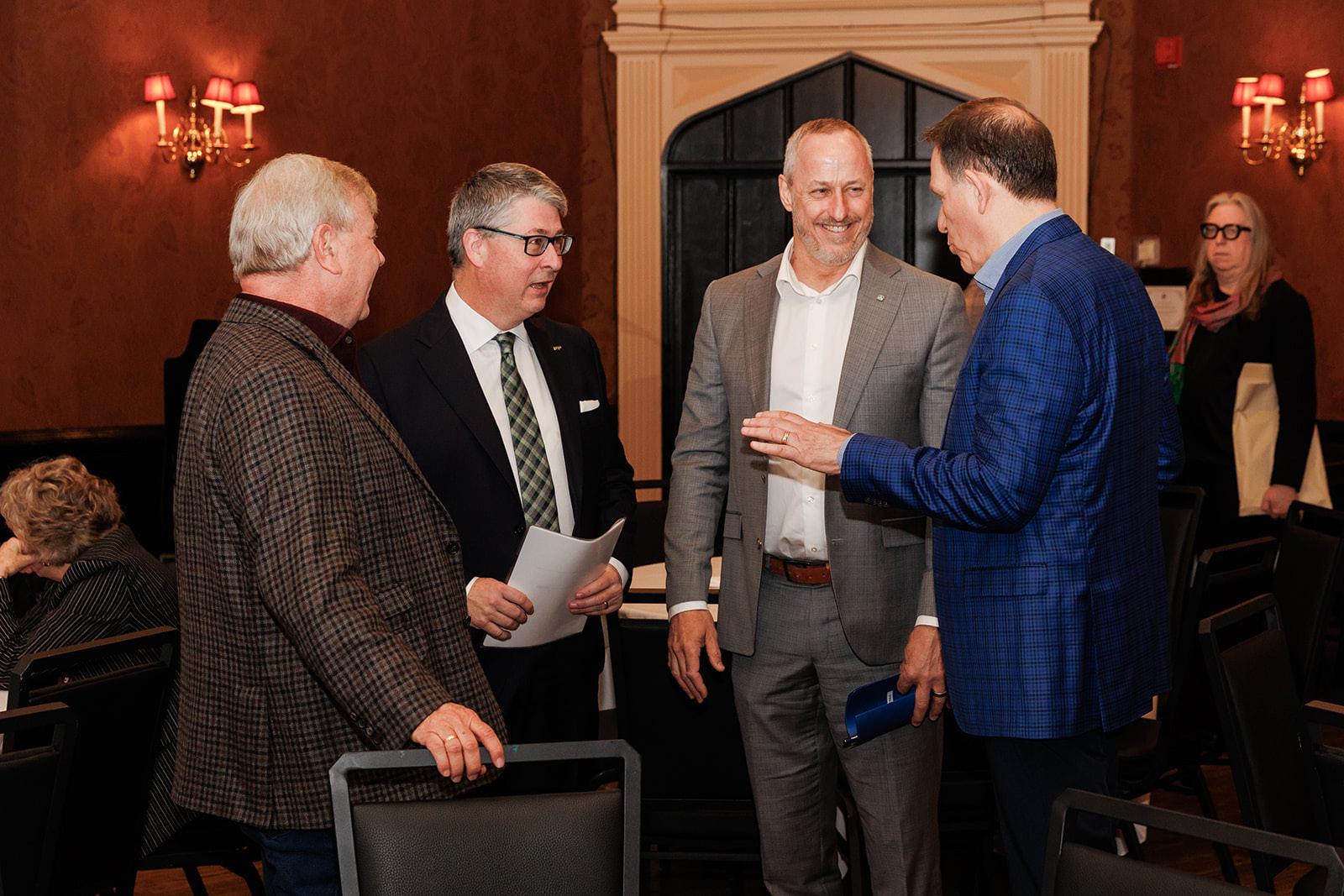
FRPO’s 2026 Annual General Meeting on May 14 brought members together in person for a productive and engaging morning focused on connection, reflection, and the formal business of the association Held over breakfast, the meeting provided an opportunity for members to hear updates on the association’s work over the past year, participate in key governance activities, and engage directly with leadership and industry peers
The meeting opened with remarks from FRPO President & CEO, Tony Irwin, who welcomed members and provided introductory comments before introducing guest speaker, the Honourable Doug Downey, Attorney General of Ontario Doug shared insights on his work to improve the efficiency and accessibility of the province’s justice system, highlighting ongoing efforts to streamline court processes and ensure fair and timely access to justice for all Ontarians. His remarks set the tone for a thoughtful and informative morning.
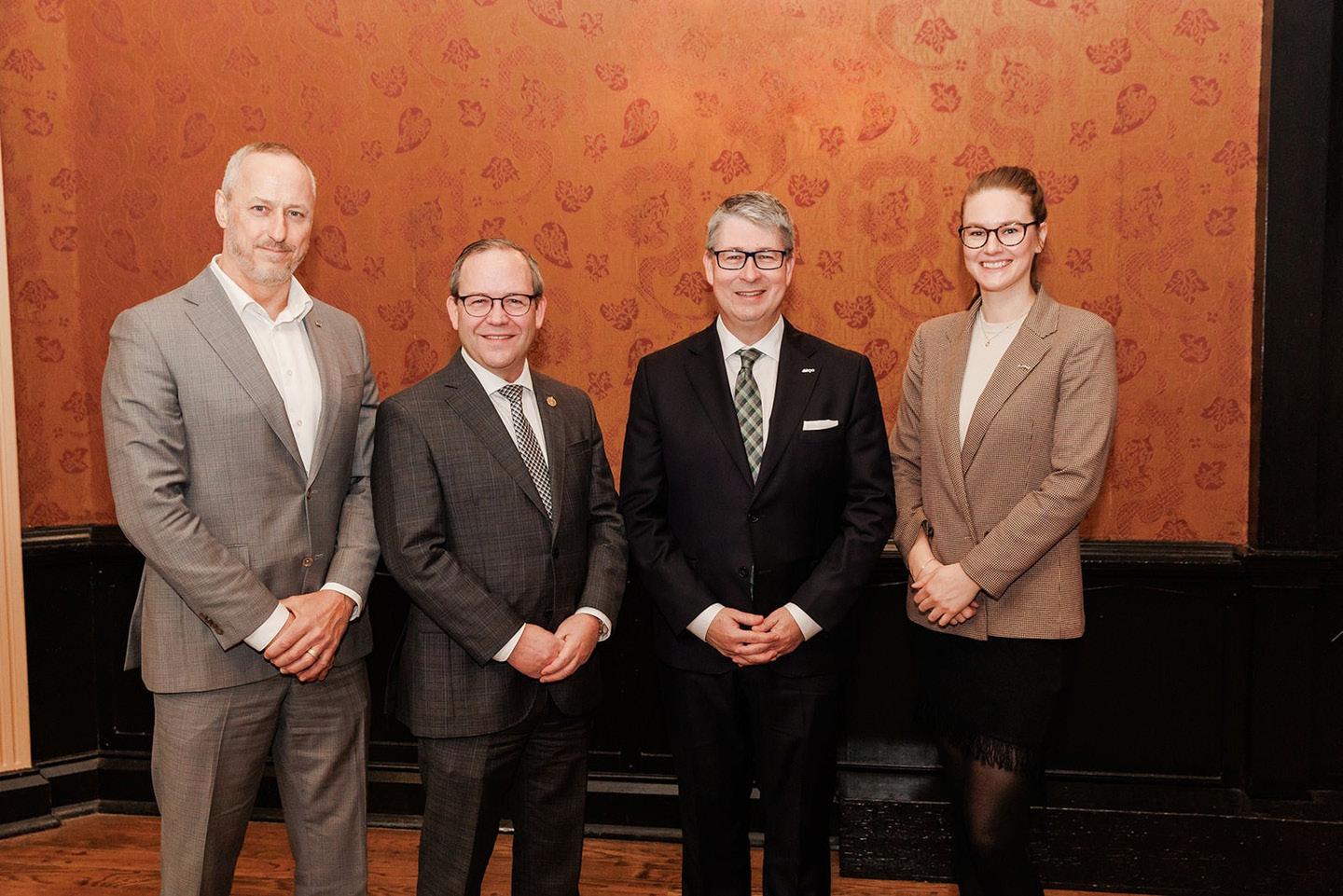
Jason Ashdown, Skyline, & Chair, FRPO l Hon Doug Downey, Attorney General of Ontario l Tony Irwin, FRPO l Marielle Hossack, FRPO
Chair of the Board, Jason Ashdown of Skyline, then took the podium to address members, reflecting on the past year and the priorities shaping the association moving forward. His remarks emphasized the importance of collaboration across the membership and the strength of a unified voice as the sector continues to navigate evolving challenges and opportunities. He also spoke to the value of ongoing member engagement in helping guide FRPO’s work and priorities.
As part of the formal business of the meeting, members reviewed and approved the financial statements, reappointed auditors, and participated in the election and reappointment of Directors
During this process, FRPO was also pleased to officially welcome new Board member Erica These governance activities reinforced accountability and strong leadership within the organization, reflecting FRPO’s member-driven structure and the important role members play in guiding the association’s direction
Throughout the morning, members also had the opportunity to reconnect with colleagues, exchange insights, and strengthen relationships with industry peers. The strong turnout reflected continued engagement and commitment across the membership base, as well as the value placed on coming together in person for this annual gathering.
The AGM concluded with a shared focus on the year ahead, as FRPO continues its work to advocate for a strong, sustainable, and professionally managed rental housing sector across Ontario The association remains committed to advancing member priorities through advocacy, education, collaboration, and industry leadership, while supporting a stable and well-functioning rental housing environment
We would like to extend our sincere thanks to all members who attended and participated in this year’s Annual General Meeting. Your engagement, input, and ongoing support are what strengthen FRPO and enable the association to continue delivering meaningful work. We are grateful for your participation and look forward to continuing to work together in the year ahead.
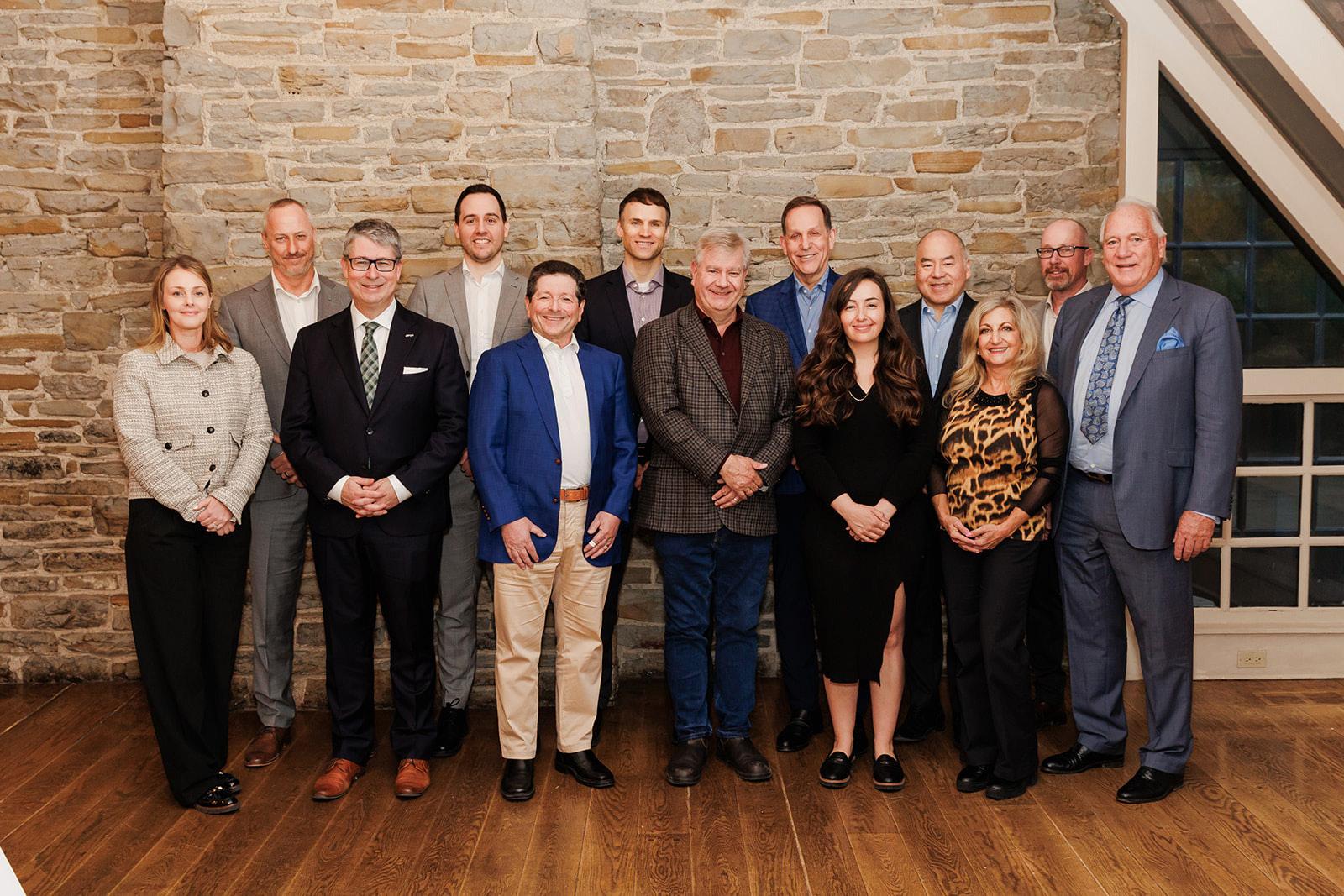
Front Row: Erica Penrose, GWL Realty Advisors l Tony Irwin, FRPO l Allan Weinbaum, WJ Properties l Allan Drewlo, Drewlo Holdings, & Past-Chair, FRPO Michelle Calloway, Minto Group l Gloria Salomon, DBS Developments, & 1st Vice-Chair, FRPO l Brent Merrill, Metcap Living Management
Back Row: Jason Ashdown, Skyline, & Chair, FRPO l Josh Giancola, Oxford Properties l Matt Walter-Connoy, Pinedale Properties Ken Kirsh, Sterling Silver Development Company l Gary Lee, BentallGreenOak l Colin Martin, Realstar Corp
What Canada's renters want in 2026: Findings from the Rentals.ca Spring Survey
By Rentals.ca
Affordability pressure is defining the 2026 rental market. 70% of renters surveyed by Rentals.ca identify high rent prices as their single biggest challenge. Unsuitable listings and low supply trail far behind at 11% and 6%, respectively. For operators, this signals a market where price sensitivity is acute and broadly distributed, not concentrated in lower-income segments alone.
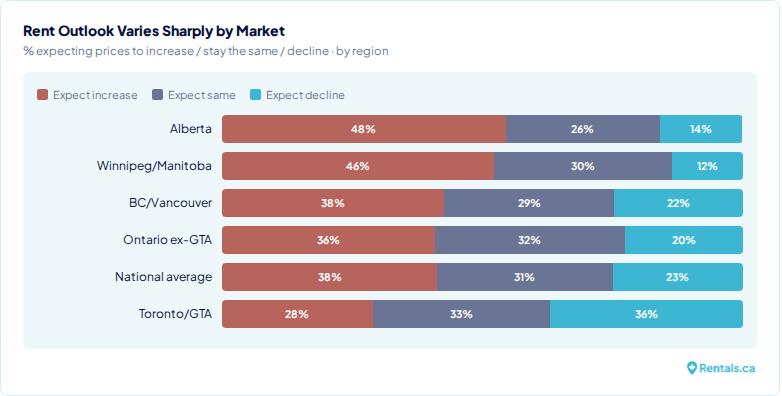
Only 25% of renters expect prices to decline over the next six months. 34% expect them to hold, and 12% expect a large increase. The majority of active searchers are entering the market with a defensive posture, budgeting conservatively and prioritizing value. Alberta renters are the most pessimistic despite the province's comparatively lower rent levels, with 48% expecting further increases.
The budget reality
42% of renters are searching with a budget under $1,500 per month. Only 18% can reach the $2,000 to $2,499 range, and fewer than 11% are searching above that. With Canada's average asking rent at $2,029, a significant share of active demand sits below the price floor of much of the available supply.
STRONG SUPPLY. RELIABLE SUPPORT.
H&S Building Supplies Ltd serves the multi-residential sector with MRO and renovation products. We support property managers, maintenance teams, and contractors with dependable inventory, delivery, and supply solutions.
1,700+ PROPERTIES SERVED
8,500+ PRODUCTS ACROSS 10 CATEGORIES
200+ CANADIAN SUPPLIERS
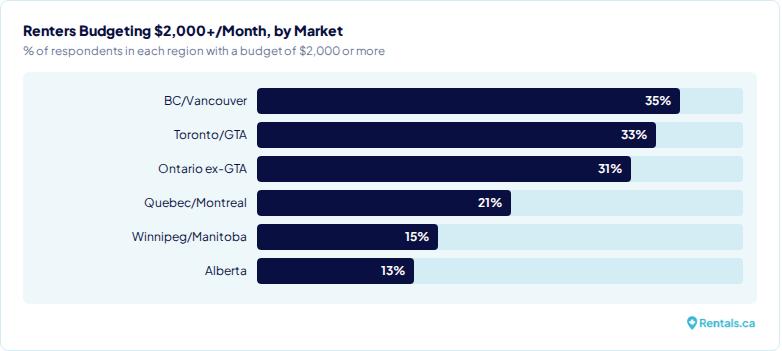
The picture varies by market. 35% of BC renters and 33% of Toronto/GTA renters are budgeting $2,000 or more, both well above the national distribution. 61% of Alberta renters have a budget under $1,500. For Ontario operators specifically, the concentration of demand in the sub-$2,000 range is worth noting when assessing vacancy risk and pricing strategy.
The primary driver of movement is cost. 40% of renters say they are moving specifically to find something more affordable. Wanting more space (30%) and relocating for work or school (22%) follow. Most movement in the market right now is financially motivated, not aspirational.
Who is actively searching
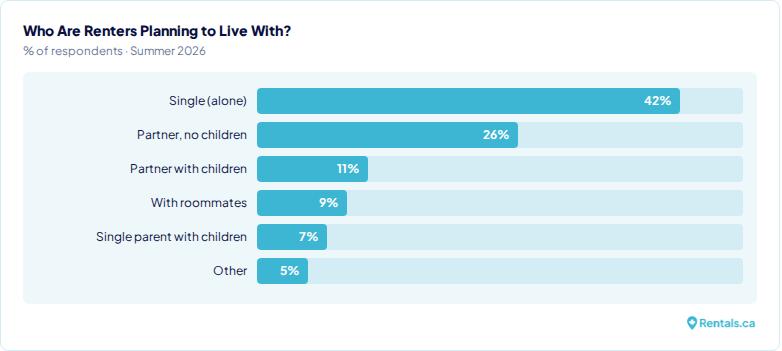
Solo renters make up the largest segment at 42%, followed by couples without children at 26%. Families with children account for about 18% combined. 47% of respondents earn under $50,000 annually. These income levels, combined with the budget distribution above, define the realistic demand pool for most Ontario rental properties.
Most searchers are experienced renters. 72% have been renting for at least three years, and 37% for more than a decade. The 9% who have never rented before are younger (median age 27), moving primarily for work or school, and budgeting at current market rates rather than from the reference point of a legacy lease, meaning they have no downward anchor on price expectations.
“29% of renters surveyed have used AI tools such as ChatGPT or Google Gemini in their apartment search… 73% found the experience helpful.”
What renters are looking for
One- and two-bedroom units account for the majority of demand at 38% and 35%, respectively. Purpose-built apartments are the most sought-after property type at 52%, followed by condo apartments at 18%.
In-unit laundry has moved from a premium feature to a baseline expectation. 67% of renters say they would pay more for it, well ahead of central air conditioning (45%), private outdoor space (40%), and parking (39%). For operators considering capital improvements or positioning existing stock, in-unit laundry has the clearest return on willingness-to-pay.
On move-in incentives, free utilities lead at 43%, ahead of free rent periods (18%) and free parking (11%). A meaningful 19% say they don't actively seek incentives, suggesting the base offer matters more to a substantial segment than any promotional layer on top.
AI is changing how renters search and evaluate
29% of renters surveyed have used AI tools such as ChatGPT or Google Gemini in their apartment search. Among those who have, 73% found the experience helpful. This is the first year Rentals.ca has tracked this metric, and the adoption rate is already material.
The top reported uses are finding listings and neighbourhoods (57%), comparing rental prices (45%), understanding lease terms (40%), getting budgeting advice (38%), and writing messages to landlords (33%).
Each of these has a direct operational consequence. On listing visibility: AI-assisted search tools surface and rank listings differently than traditional keyword search. Properties with complete, structured, and accurate listing information are better positioned in AI-driven discovery. Operators who have optimized for search engine visibility may need to consider how AI tools interpret listing content.
On pricing: 45% of AI users are actively using these tools to benchmark rental prices. Pricing decisions operate in a more transparent environment than they did two or three years ago. Prospective tenants are arriving with comparative data.
On lease terms: 40% of AI users are using these tools specifically to understand lease terms and tenancy conditions. Renters are increasingly doing AI-assisted due diligence before signing. This raises the standard for lease clarity and may change the nature of pre-signing conversations.
Adoption is highest among younger renters, with 36% of 25- to 34-year-olds reporting use, but extends across age groups, with 23% of renters 65 and over also reporting AI use. First-time renters are the most likely segment overall at 38%. Toronto leads nationally at 34%.
This survey collected responses from 1,194 renters across Canada in Spring 2026. National findings are reported; Ontario operators should note that Toronto/GTA and Ontario ex-GTA are among the most represented markets in the sample. For the full survey findings, visit Rentals.ca.
SUMMER RISK MANAGEMENT:
5 AREAS PROPERTY MANAGERS SHOULD REVIEW BEFORE SEVERE WEATHER STRIKES
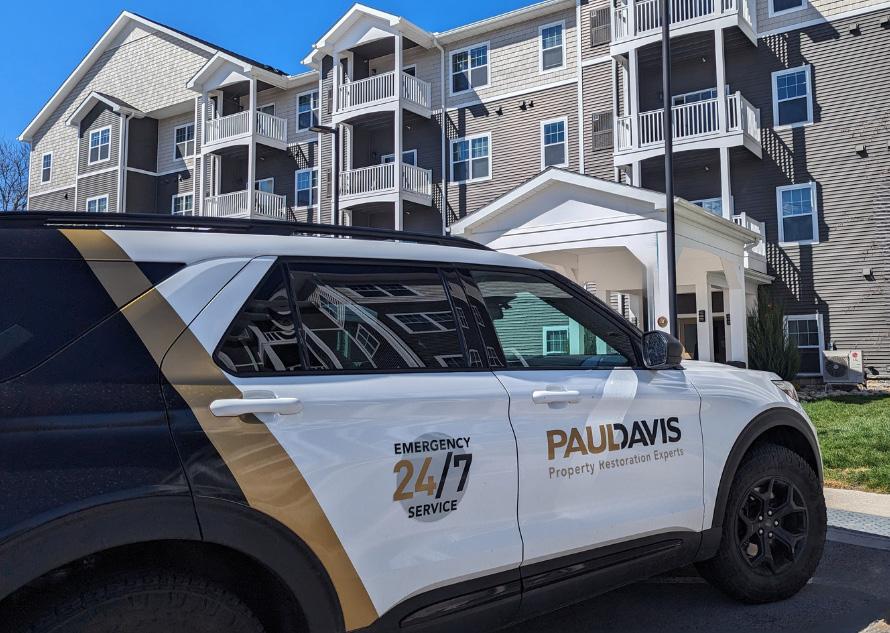
By Stephanie Carmichael, Director, Regional Sales & The Paul Davis Canada Team
Aproactive approach to protecting residents, minimizing disruption, and reducing property damage during Canada’s busiest weather season.
For property managers and rental housing providers, summer is often associated with landscaping projects, resident events, and capital improvements. However, it is also one of the highest-risk seasons for property damage across Canada.
From severe thunderstorms and flash flooding to prolonged heat waves and high winds, summer weather events have become increasingly frequent and unpredictable. When damage occurs, the costs extend well beyond the repair itself. Property managers must also contend with resident disruption, operational challenges, insurance claims, and reputational impacts.
While no property can be completely immune to extreme weather, proactive planning can significantly reduce both the likelihood and severity of damage. As we move into the height of the summer season, here are five key areas property managers should review to help protect their buildings, residents, and operations.
1. Inspect building exteriors and water entry points
Water intrusion remains one of the most common causes of property damage in multi-residential buildings. Summer storms can quickly expose vulnerabilities that may go unnoticed during routine operations.
Property managers should review:
• Roof condition and drainage systems
• Gutters and downspouts
• Window and door seals
• Exterior caulking and flashing
• Foundation drainage and grading
Even minor deficiencies can allow significant amounts of water into a building during a heavy rainfall event. Identifying and addressing these issues before storm season peaks can help prevent costly repairs and resident displacement.
2. Review emergency response procedures
When a weather-related incident occurs, the first few hours are often the most critical. Having a clear response plan in place can significantly reduce confusion and improve outcomes.
Consider reviewing:
• Emergency contact lists
• Internal escalation procedures
• After-hours response protocols
• Vendor and contractor contact information
• Resident communication processes
Trusted advisors for every stage of your
building’s lifecycle.
Our specialists provide:
■ Garage & Balcony Assessment & Restoration
■ Building Cladding Design, Assessment & Remediation
■ Roofing System Design, Assessment & Remediation
■ Building Condition Assessments
■ Capital Planning
■ Building Renewal
■ Energy Audits and Modelling
Engineering that listens, leads, and lasts. rjc.ca
Philip Sarvinis | Tim Van Zwol | Jeremy Horst | Michael Pond | Duncan Rowe | Jack Albert Beau Gaudreau | James Cooper | Nigel Parker | Paul Fritze | Sohrab Karkhel | Michael Park
Many organizations invest heavily in prevention but overlook response planning. Ensuring that key stakeholders understand their roles before an emergency occurs can help minimize disruption and accelerate recovery.
3. Evaluate common areas and site drainage
Heavy rainfall can create issues well beyond the building envelope.
Property managers should assess:
• Underground parking areas
• Catch basins and storm drains
• Walkways and pedestrian routes
• Retaining walls
• Outdoor amenities and gathering spaces
Blocked drainage systems and poor water flow can quickly result in flooding, safety hazards, and accessibility concerns for residents. A seasonal inspection can often identify potential issues before they become larger problems.
4. Prepare for heat events and HVAC challenges
Across much of Canada, extreme heat events are becoming more frequent and longer in duration. In addition to resident comfort, heat-related issues can impact building systems and increase operational demands.
Property managers should consider:
• HVAC system maintenance and inspections
• Cooling system performance testing
• Backup plans for equipment failures
• Communication strategies for residents during heat advisories
• Identification of vulnerable resident populations who may require additional support
For seniors, young children, and individuals with health concerns, prolonged heat can present serious risks. Proactive planning helps ensure buildings remain safe and functional during periods of extreme temperatures.
5. Strengthen resident communication plans
One of the most valuable tools during any emergency is effective communication.
Residents want timely, accurate information about:
• What is happening
• What actions they should take
• What to expect next
• Where to find assistance
Preparing communication templates in advance can help streamline messaging during a weather event. Whether through email, text alerts, resident portals, or posted notices, clear communication can reduce anxiety, improve cooperation, and support a smoother recovery process.
The value of preparedness
Property managers face increasing pressure to balance operational efficiency, resident satisfaction, risk management, and financial performance. While severe weather events cannot be prevented, their impact can often be significantly reduced through preparation.
By reviewing building vulnerabilities, emergency procedures, site conditions, HVAC readiness, and communication plans, property managers can strengthen resilience across their portfolios and better protect the people who rely on them.
Summer may be Canada’s busiest weather season, but it also presents an opportunity to take proactive steps that help minimize disruption and improve outcomes when unexpected events occur.
A small investment in preparedness today can prevent a much larger problem tomorrow.
Questions about emergency preparedness planning may be directed to Stephanie Carmichael at stephanie.carmichael@pauldavis.com.
Rental Housing Canada Conference 2026
By: Lynzi Michal, Director of Operations, Rental Housing Canada
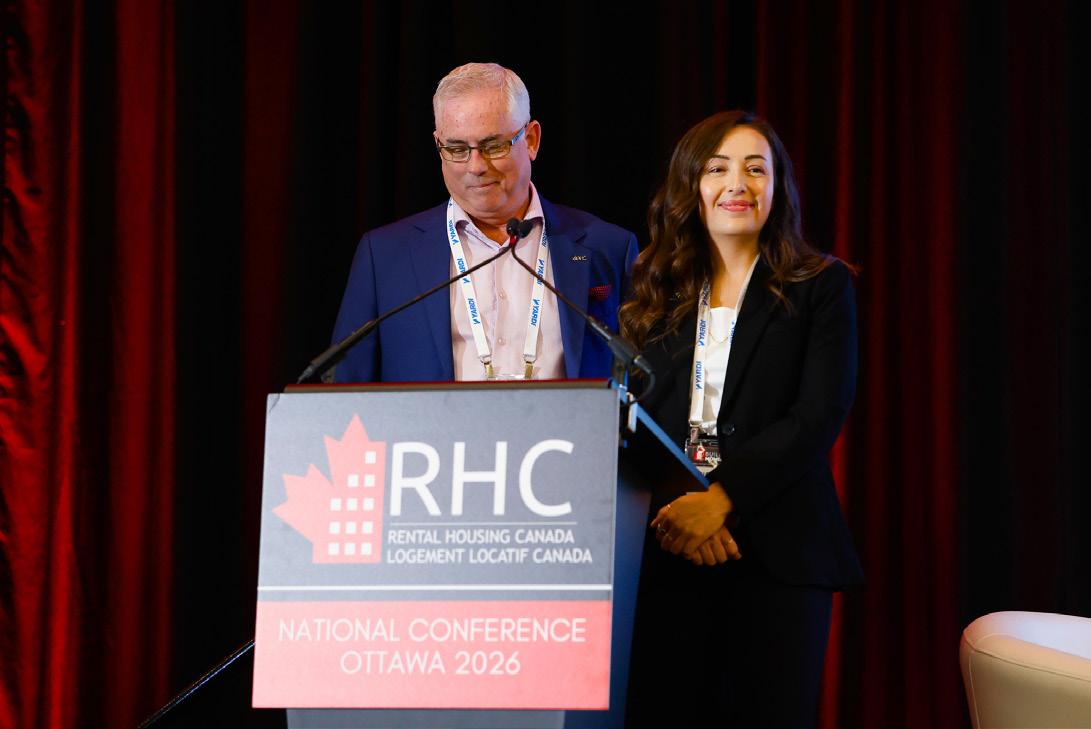
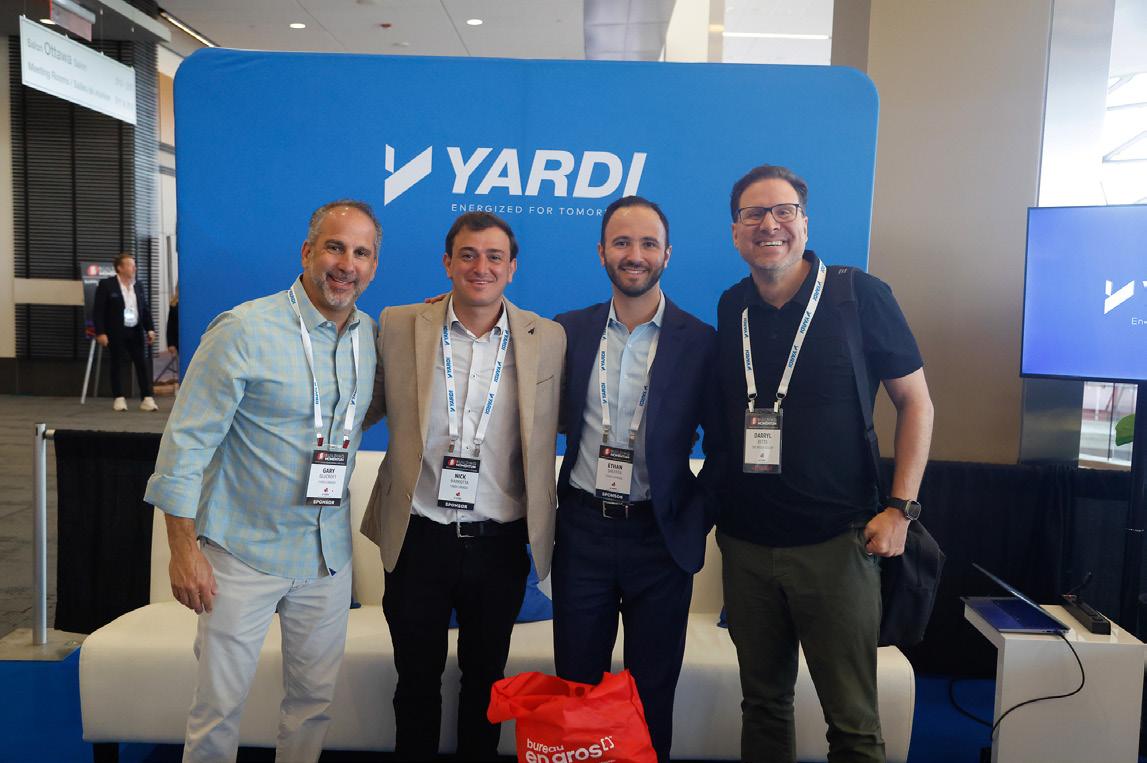
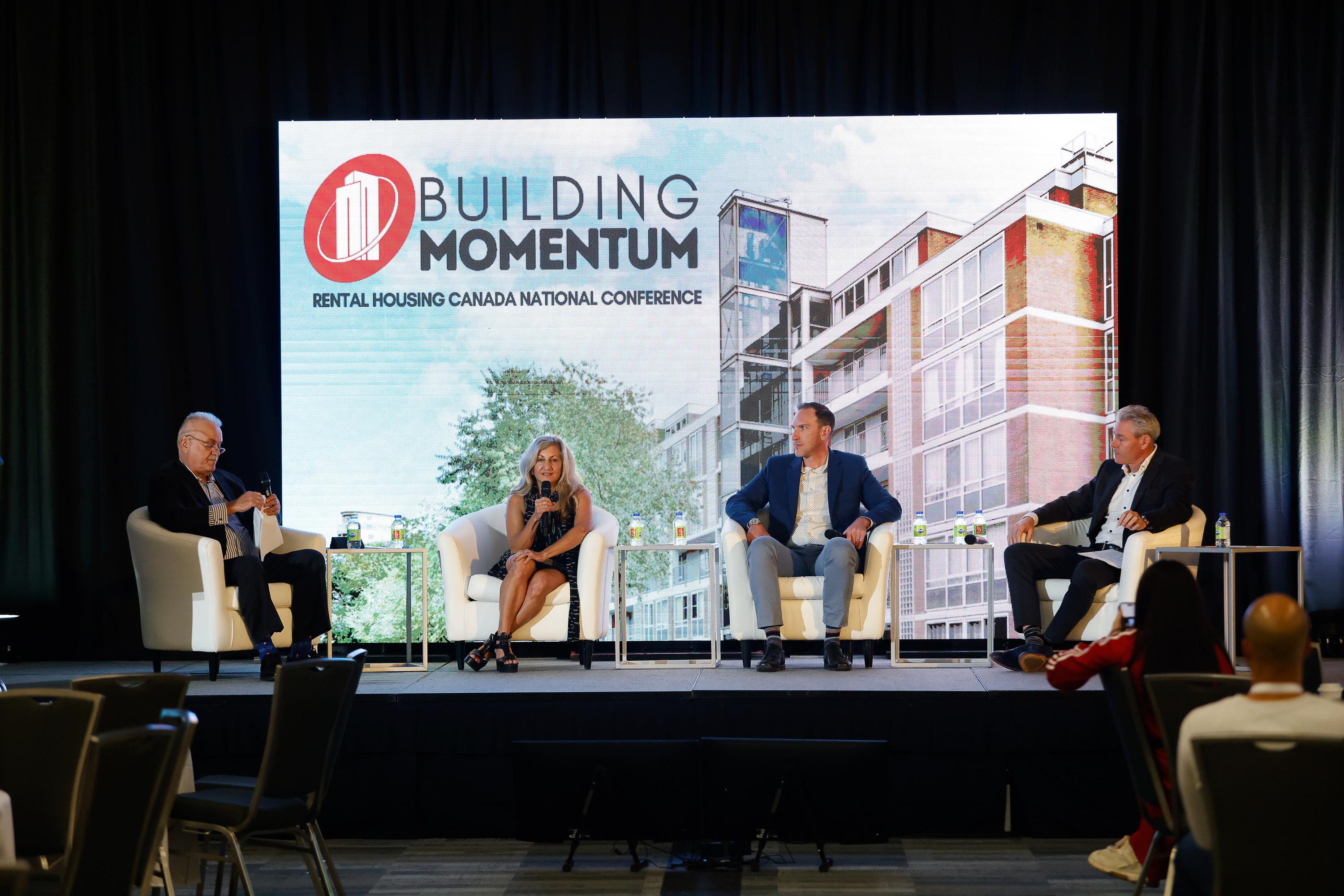
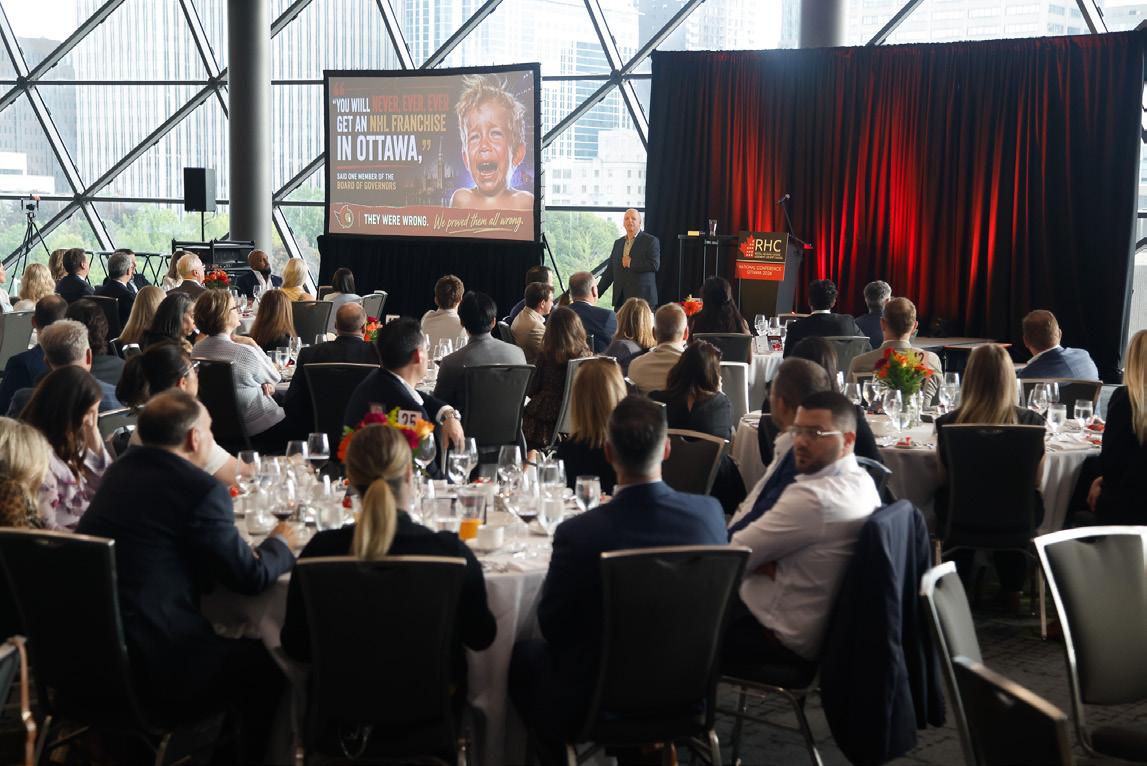
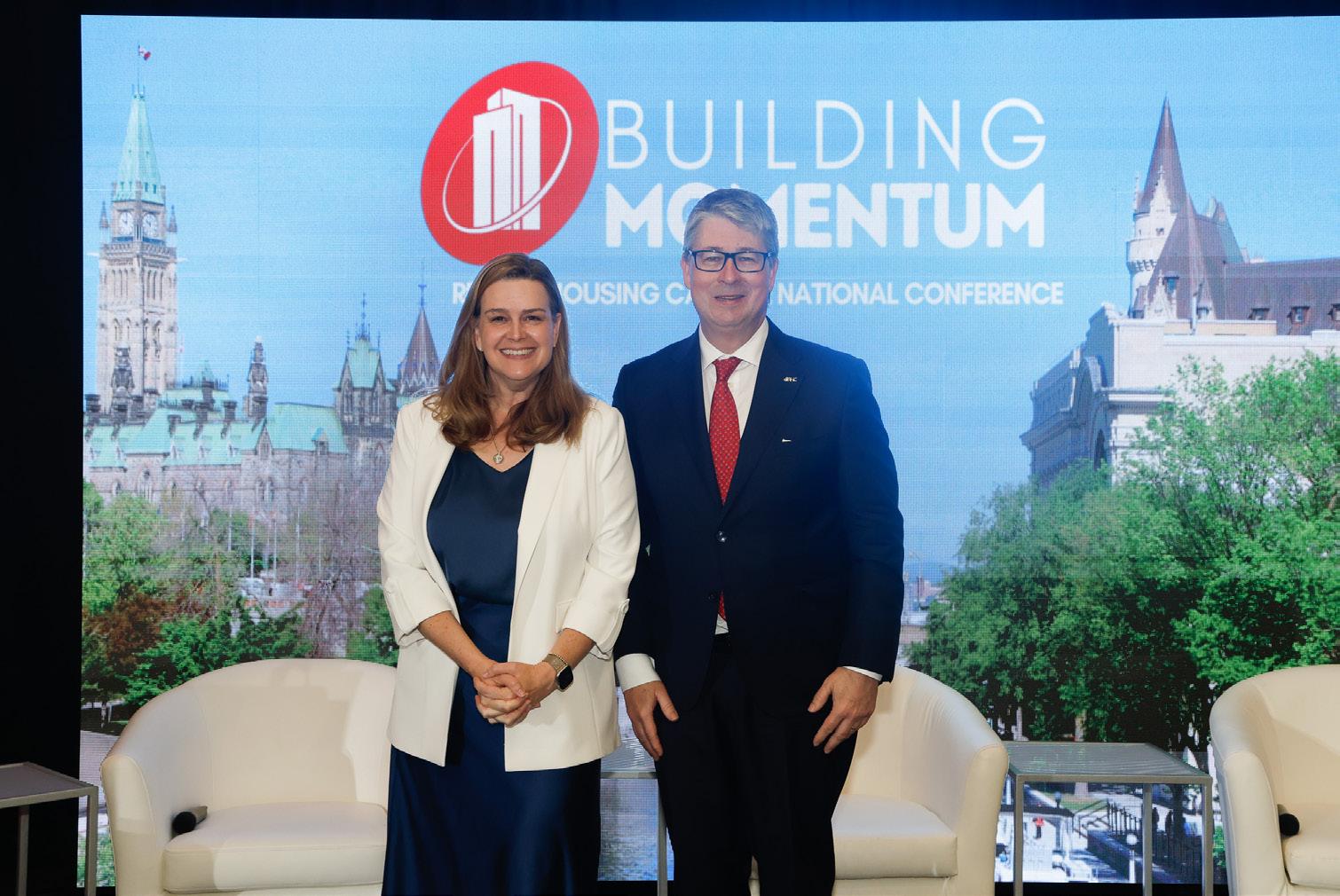
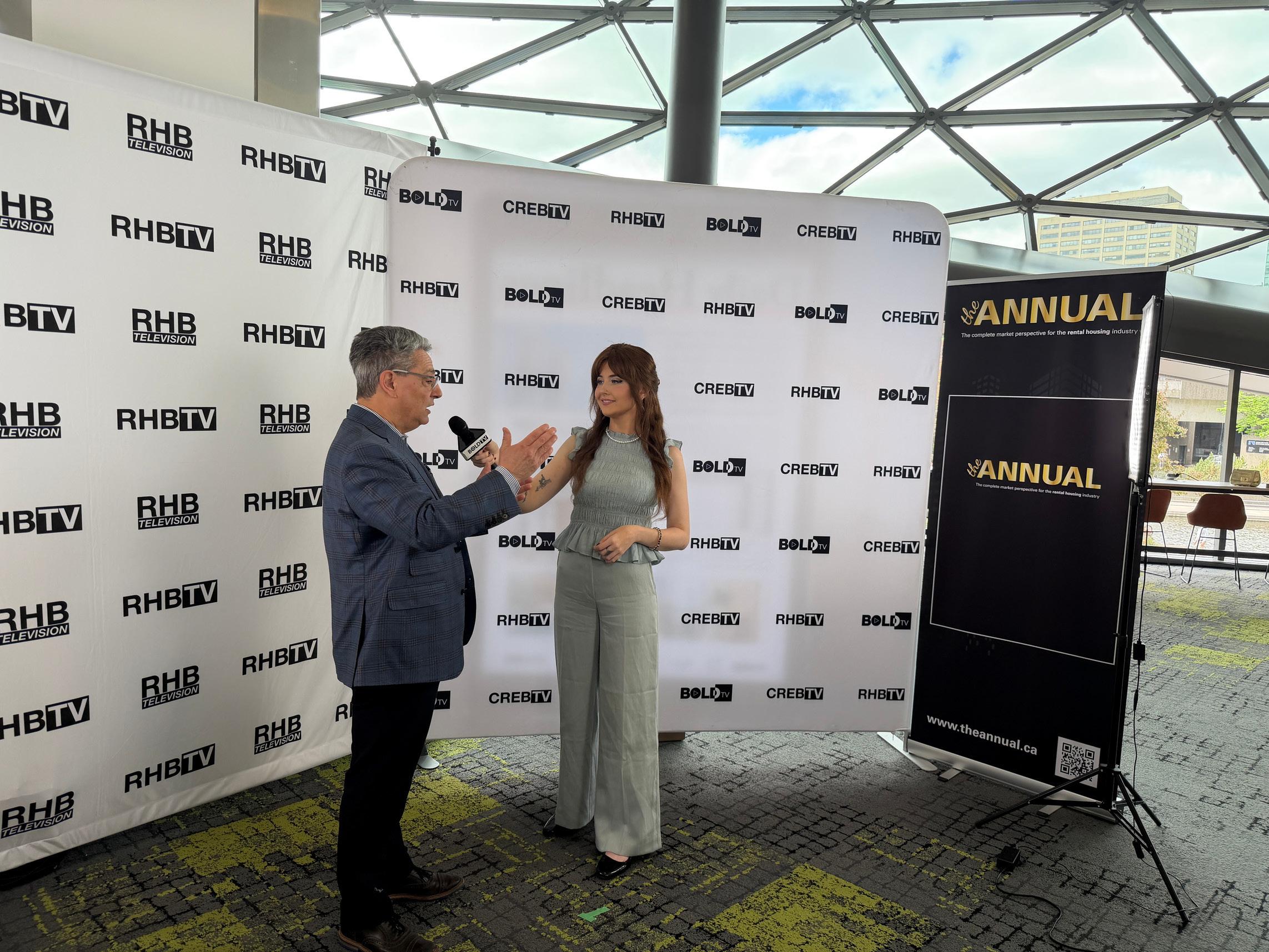
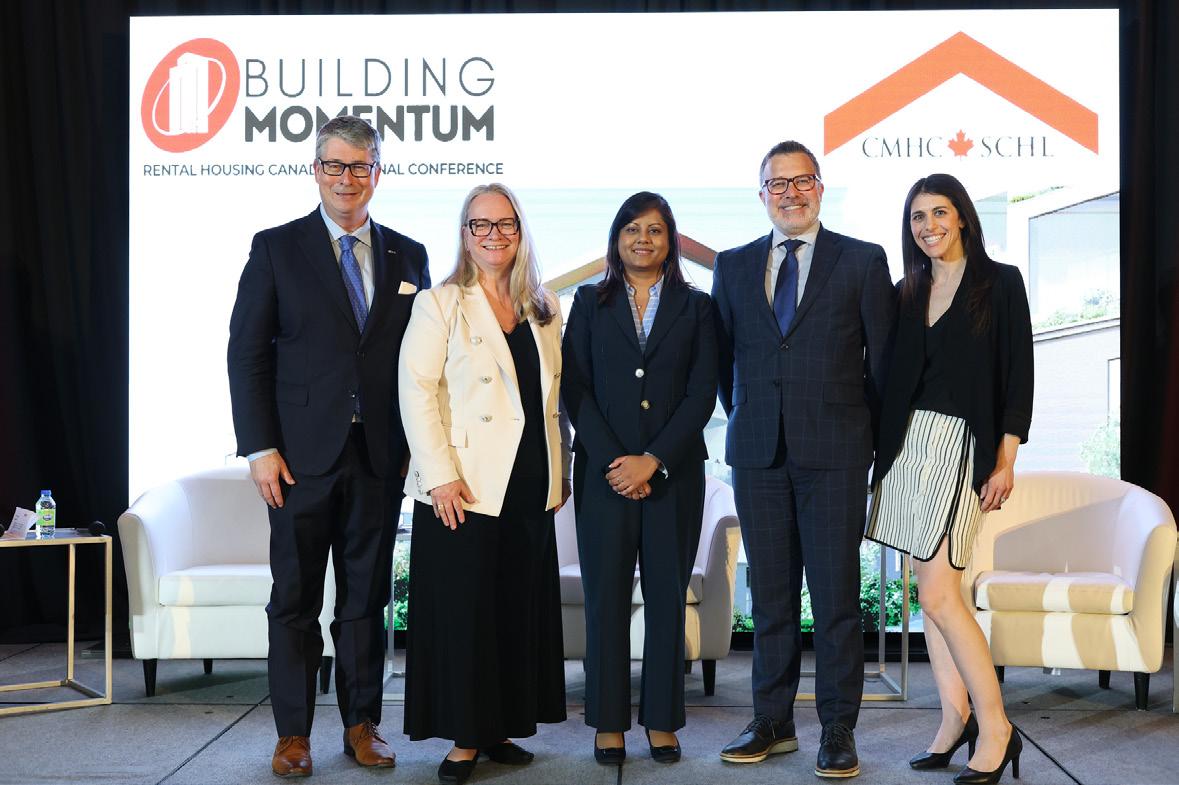
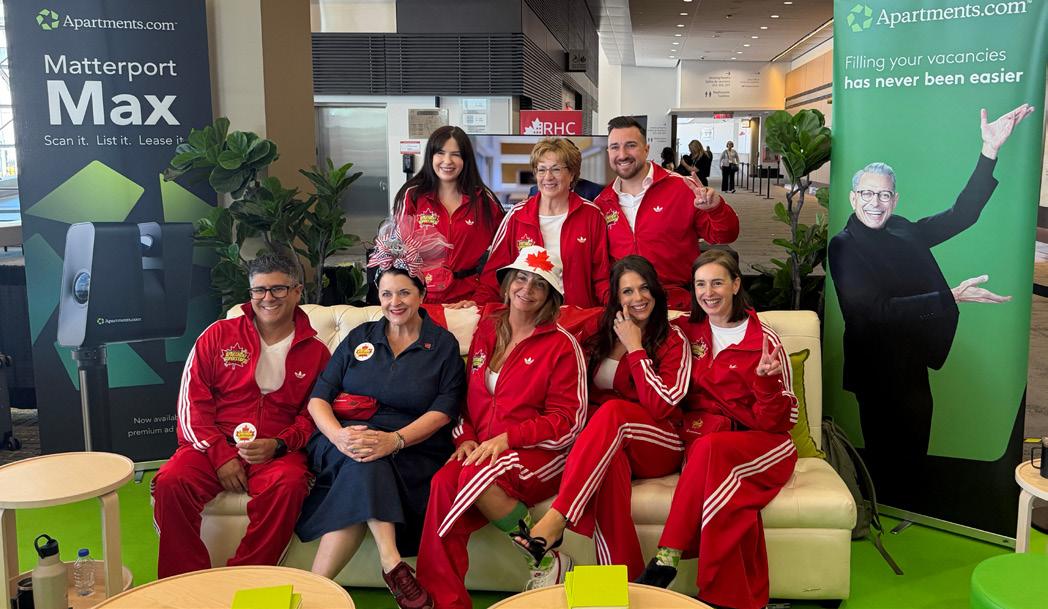
The 2026 Rental Housing Canada National Conference in Ottawa welcomed nearly 400 owners, operators, suppliers, policymakers, and industry leaders from across the country for two days of insightful discussions on the future of rental housing Throughout the conference, one message resonated across every session: addressing Canada's housing challenges will require collaboration, practical solutions, and a shared commitment to innovation. From financing and policy to operations, technology, sustainability, and the resident experience, speakers shared actionable insights to help strengthen and expand Canada's purpose-built rental housing sector.
Beyond the engaging sessions, the conference was a valuable opportunity to connect with colleagues from across the industry We extend our sincere thanks to our sponsors, speakers, exhibitors, and attendees for helping make this year's event such a success. Your expertise, collaboration, and support fostered meaningful conversations, strengthened relationships, and reinforced our shared commitment to advancing rental housing across Canada Together, we are building a stronger, more innovative future for the sector.
Key Themes & Takeaways
The conversations at this year's conference reflected an industry that remains optimistic about the long-term future of purpose-built rental housing while recognizing that the path ahead is becoming increasingly complex. Across keynote presentations, panel discussions, and networking conversations, a consistent theme emerged: the focus is shifting from simply building more housing to building, operating, and preserving rental housing more efficiently, sustainably, and strategically
While recent government attention on rental housing was welcomed, attendees consistently emphasized that strong demand alone will not guarantee future supply. Project viability, operational productivity, asset preservation, and resident well-being emerged as defining priorities for the sector We look forward to continuing these conversations next year
2026 Lifetime Achievement Award
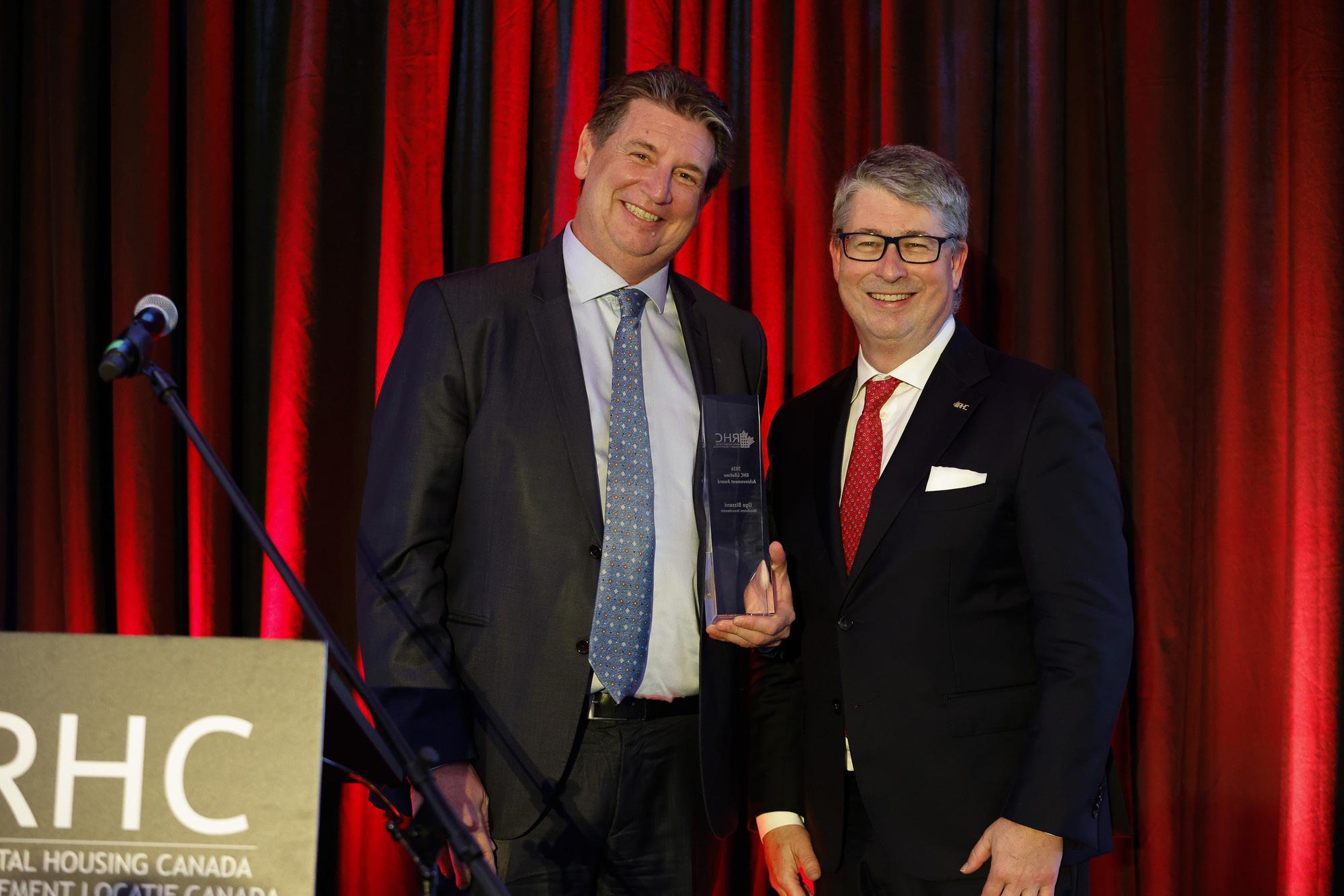
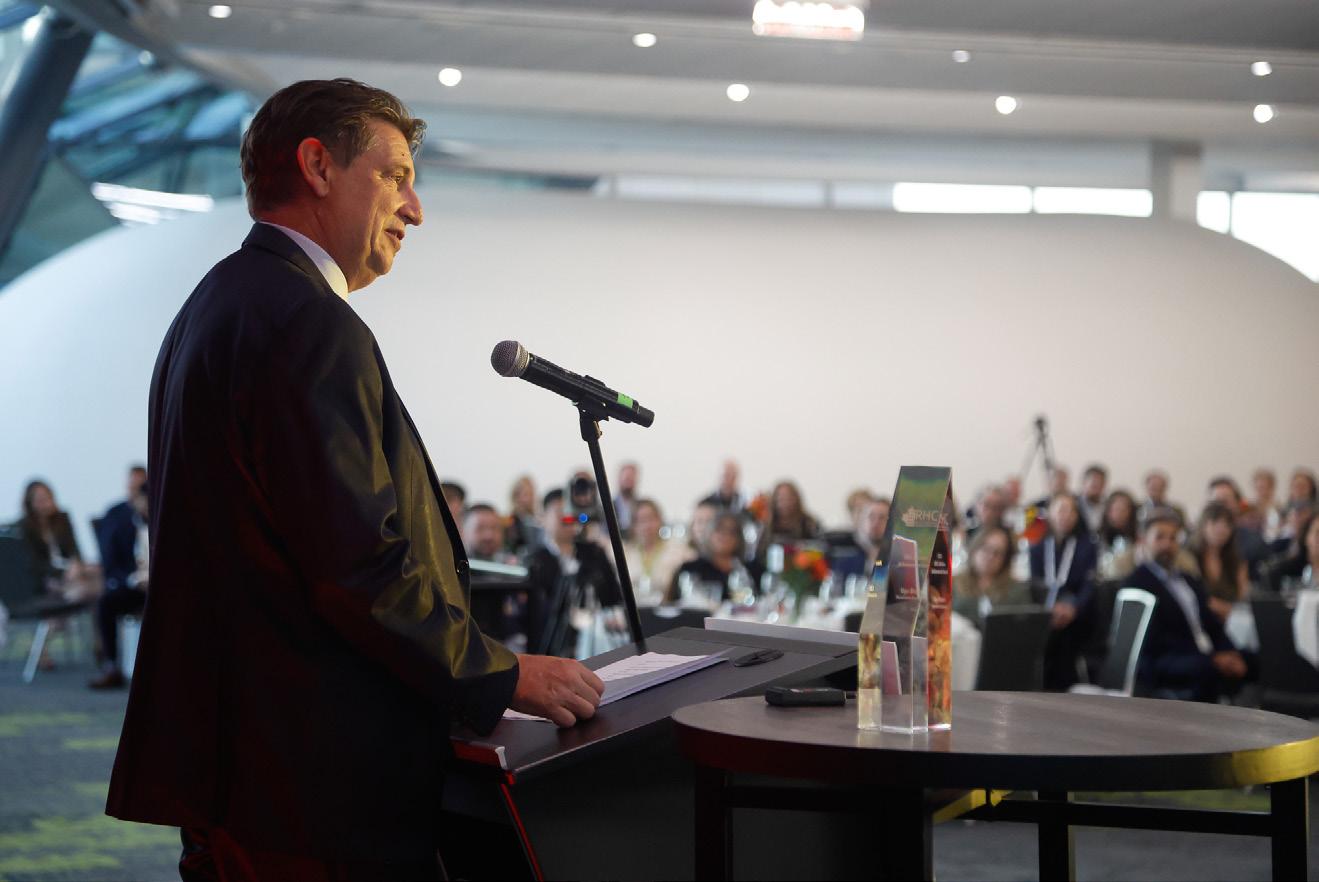
One of the highlights of the 2026 Rental Housing Canada Conference was the presentation of the Rental Housing Canada Lifetime Achievement Award to Ugo Bizzarri, Founder and Executive Chair of Hazelview Investments
The Lifetime Achievement Award recognizes individuals whose leadership, vision, and lasting contributions have helped shape Canada's rental housing industry Over more than 25 years, Ugo has played a significant role in advancing purposebuilt rental housing through industry leadership, public policy engagement, and a steadfast commitment to strengthening the sector. Under his leadership, Hazelview Investments has grown into a leading real estate investment management firm with a substantial portfolio of purpose-built rental housing across Canada. He has also served as Chair of the Federation of Rental-housing Providers of Ontario (FRPO) and founded the Hazelview Cares Foundation, reflecting his commitment to both the industry and the communities it serves
Rental Housing Canada congratulates Ugo on this well-deserved recognition and thanks him for his exceptional leadership and lasting contributions to Canada's rental housing sector
610 MARTIN GROVE
DELIVERS MIXED-INCOME HOUSING WITH PURPOSE AND QUALITY
By Courtney Allaire, Integrated Marketing Manager, Minto Group
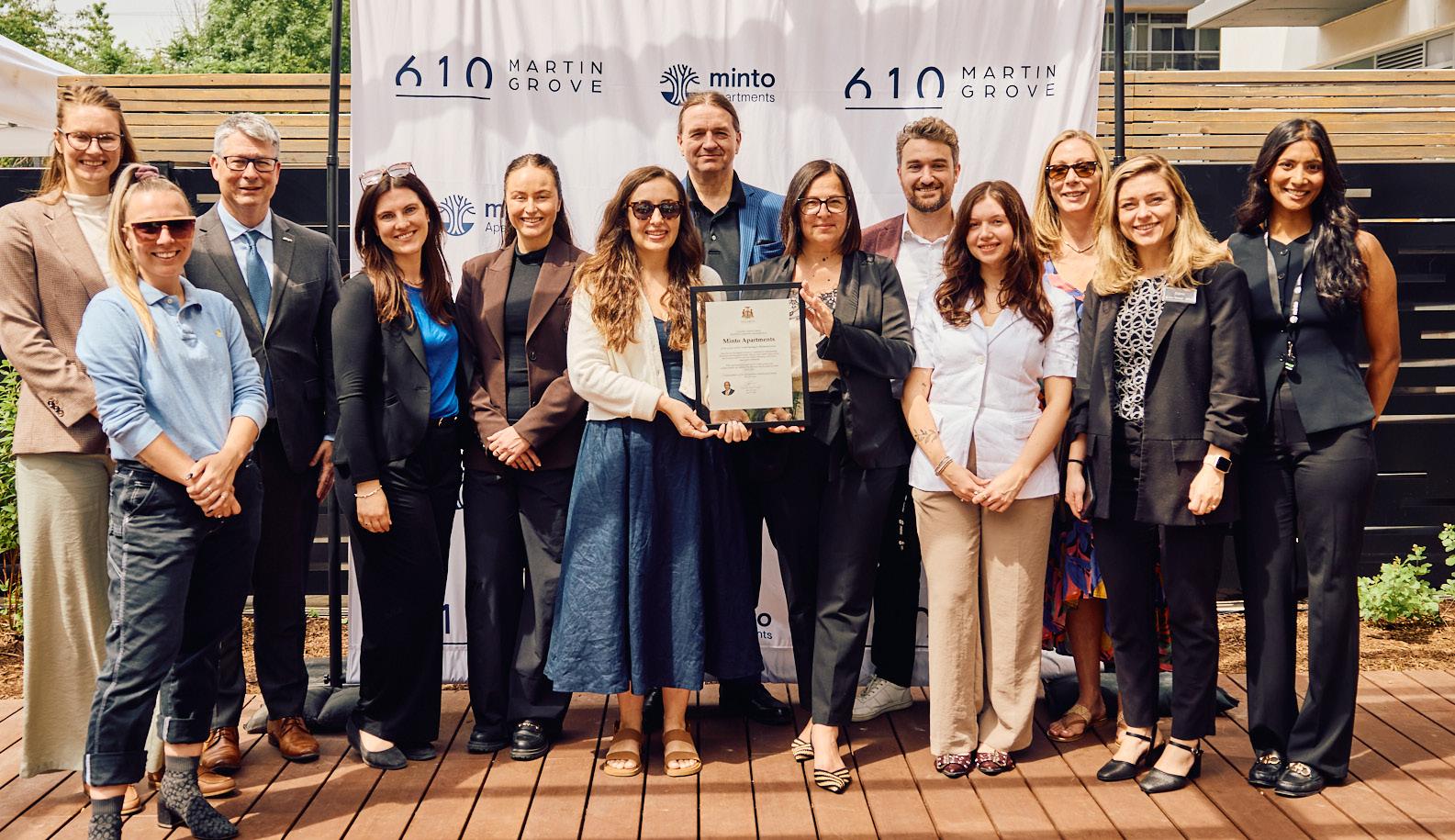
The completion of 610 Martin Grove marks a meaningful milestone for Toronto’s rental housing sector and a compelling example of what can be achieved through collaboration. Delivered by Minto Apartments in the fall of 2025, the 20-storey, 225-suite community brings urgently needed rental supply to Etobicoke, including a mix of 125 market-rate suites and 100 suites designed to meet affordability criteria.
At a time when purpose-built rental projects face mounting financial pressures, 610 Martin Grove demonstrates the impact of aligning public and private efforts. The development was made possible through partnership with the City of Toronto and Canada Mortgage and Housing Corporation (CMHC), leveraging programs such as Toronto’s Open Door initiative and CMHC’s Rental Construction Financing Initiative. These supports
enabled nearly half the building to be dedicated to attainable rental homes, helping address a critical housing need in the city.
For industry stakeholders, the project offers a clear takeaway: innovative financing and policy alignment are essential to unlocking new supply, particularly for mixed-income communities.
Equally important is how 610 Martin Grove has been brought to life as a complete, high-quality rental offering. Located at Martin Grove Road and Eglinton Avenue West, the building sits within an established Minto Apartments community, providing residents with access to transit, parks, and everyday amenities. This integration into an existing community reinforces the long-term value of thoughtful site selection and neighbourhood connectivity.
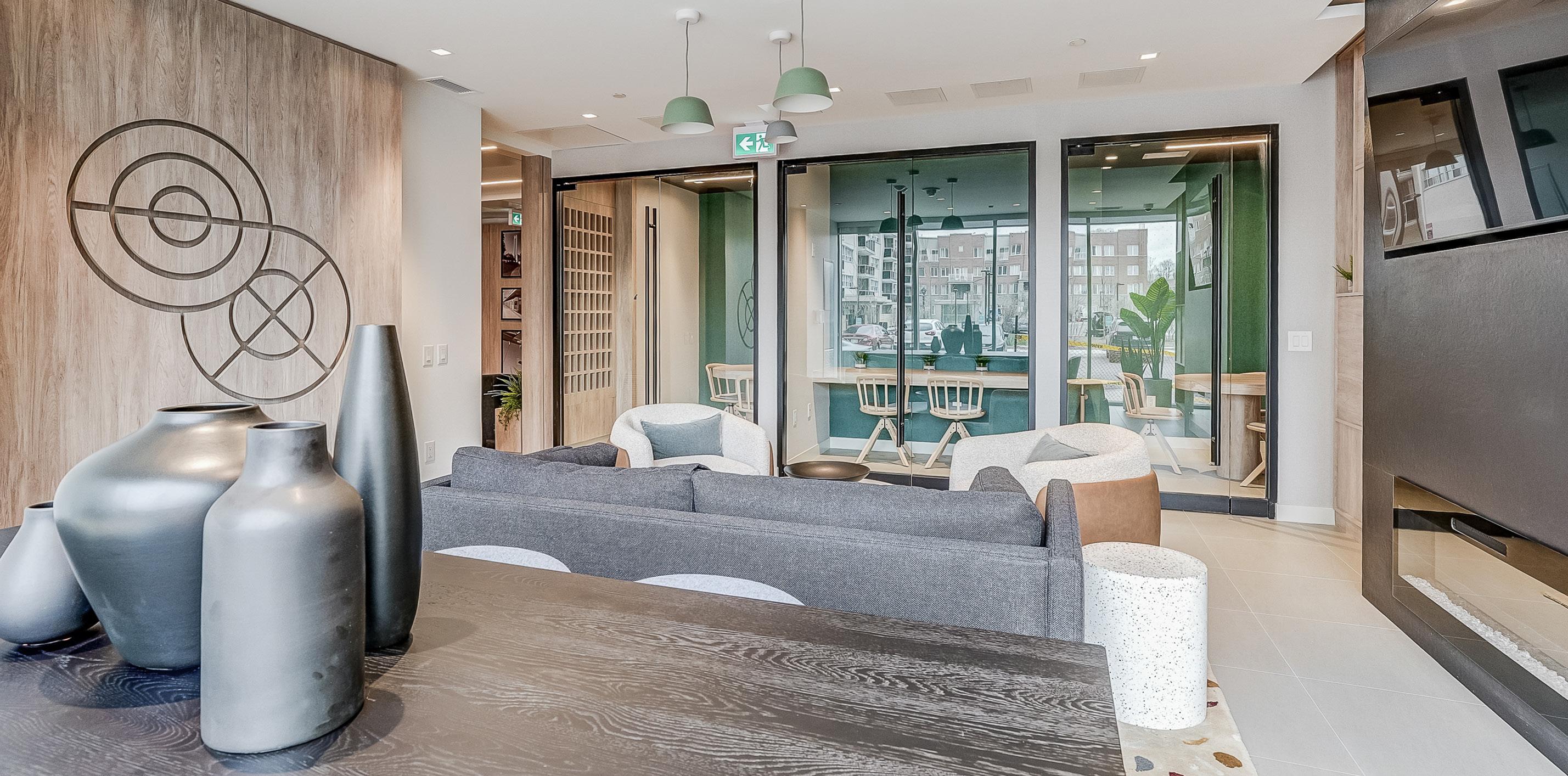
Inside the building, a strong focus on resident experience is evident. Amenities are designed to reflect evolving renter expectations, with spaces that balance convenience, flexibility, and community. Residents have access to a brand-new fitness centre, multiple coworking spaces, and a resident lounge with a kitchen and outdoor patio with barbecues, ideal for both everyday use and social gatherings. A media room, pet wash station, and onsite car share program further enhance the offering, providing practical solutions that support urban lifestyles.
The suites themselves continue this commitment to quality. Designed with open-concept layouts, each home includes contemporary finishes such as quartz countertops, ceramic backsplashes, and insuite laundry (in market suites), alongside modern appliances.
Beyond the physical building, 610 Martin Grove represents something larger for the rental housing sector:
a model of collaboration that delivers tangible results. As noted by Minto leadership, the project highlights what is possible when industry partners, municipalities, and federal programs work together toward a shared goal. The outcome is not only 225 new homes, but a community where a diverse range of residents can live, work, and connect.
For the industry, there is reason for both appreciation and optimism. Projects like 610 Martin Grove reinforce that mixed-income
development can be both viable and aspirational, balancing financial realities with a commitment to quality, inclusion, and long-term impact.
In a market where the need for rental housing continues to outpace supply, this project offers a hopeful path forward. With the right partnerships, tools, and vision, the industry can continue to deliver communities that meet the needs of today and help shape a more inclusive rental landscape for the future.
SOLUTIONS FOR ALL YOUR PROPERTY NEEDS
HD Supply Offers Maintenance, Repair & Operations products and services. Everything you need. All in one place.
NATIONWIDE DELIVERY
Flexible delivery options, from next-day to scheduled drop-offs at your site.
BUDGET MANAGEMENT
STREAMLINED PURCHASING
Save time and money with customizable e-Procurement solutions built for your business needs.
EXPERT CUSTOMER SERVICE
Whether it’s routine maintenance and repairs, property upgrades, or suite turn renovations, our dedicated team is committed to delivering a seamless experience every step of the way.
EXTENSIVE PRODUCT OFFERING
Thousands of products in stock every day, plus access to thousands more we can source on your behalf. Essential categories available, including:
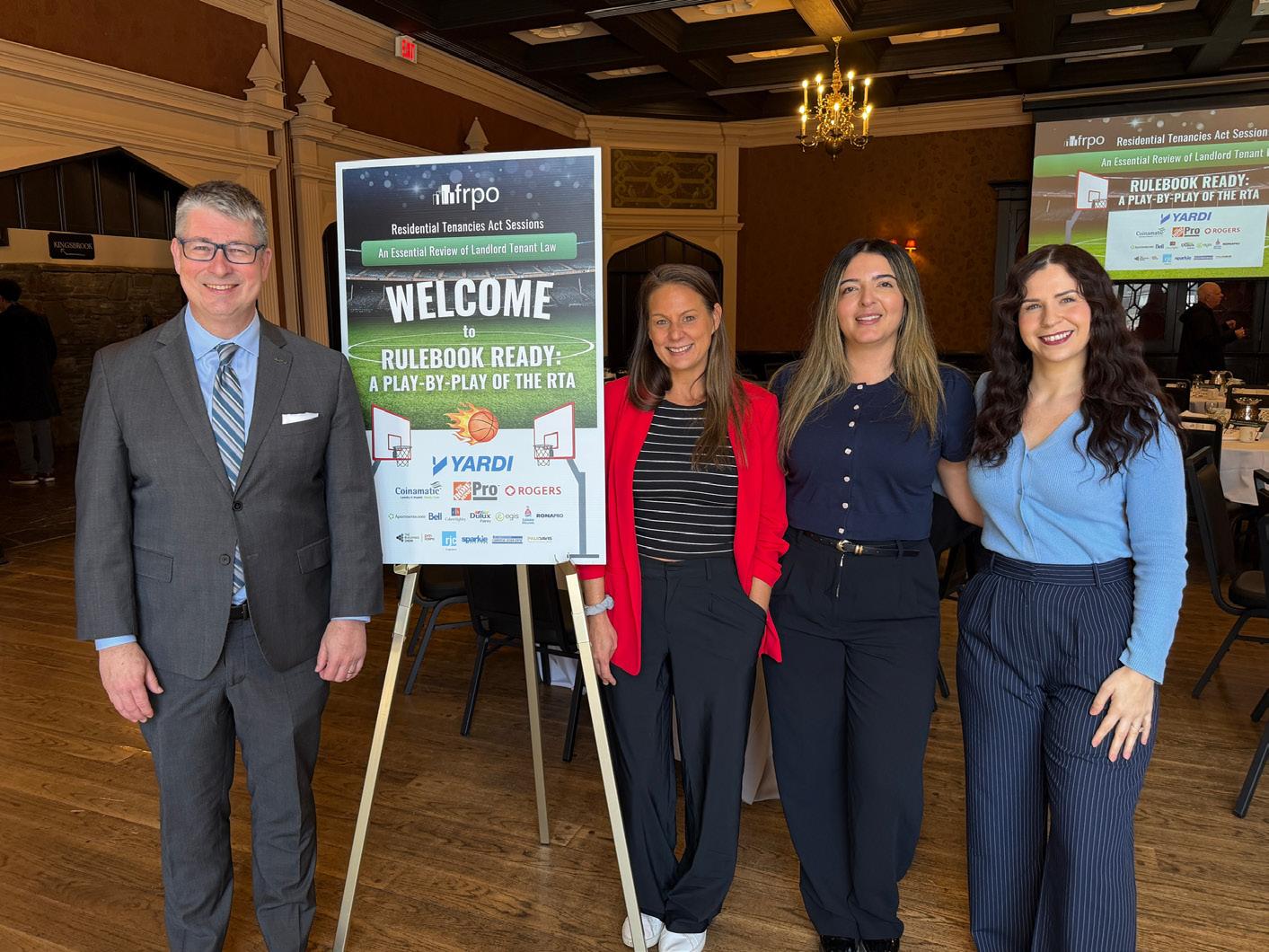
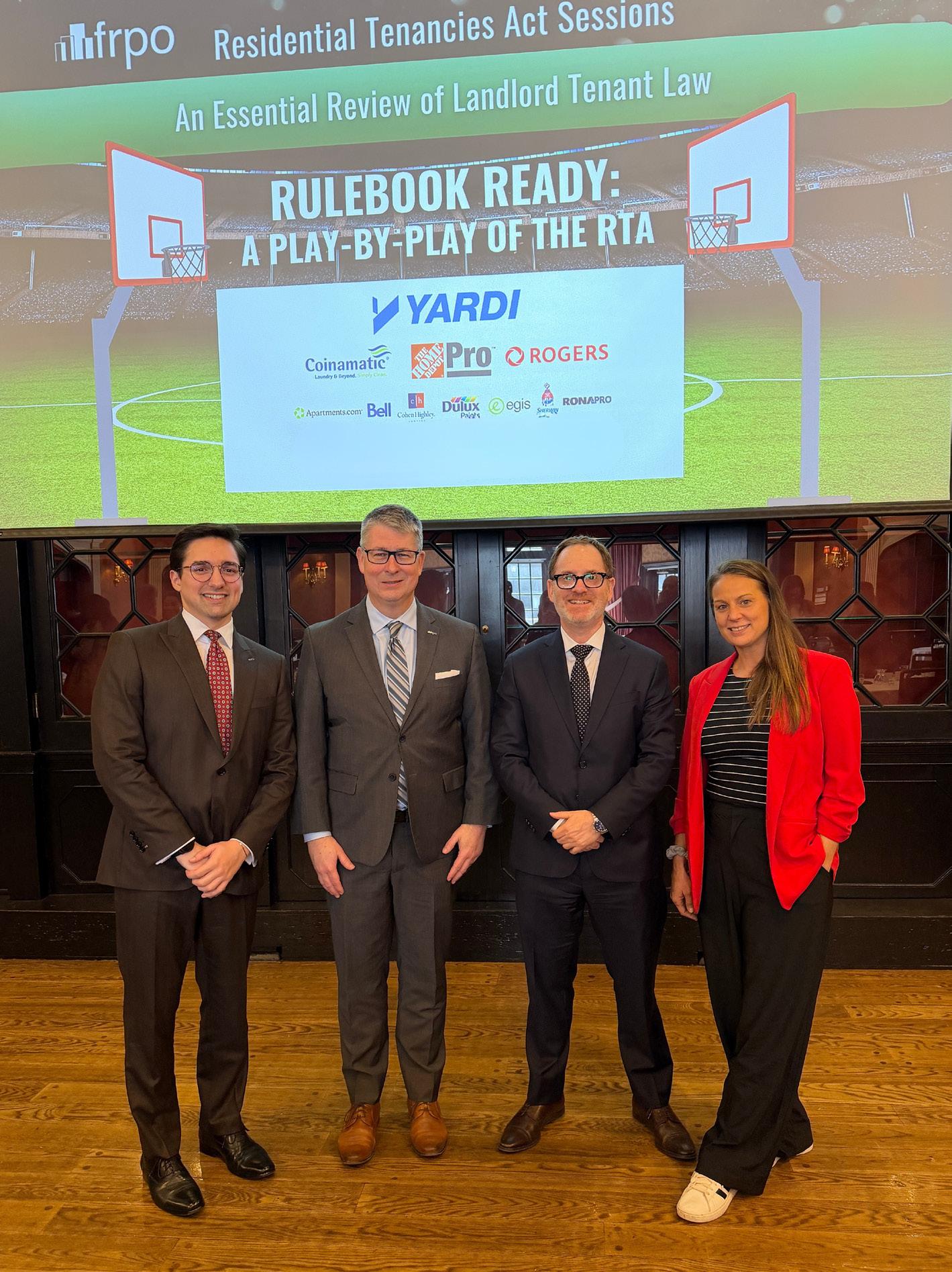
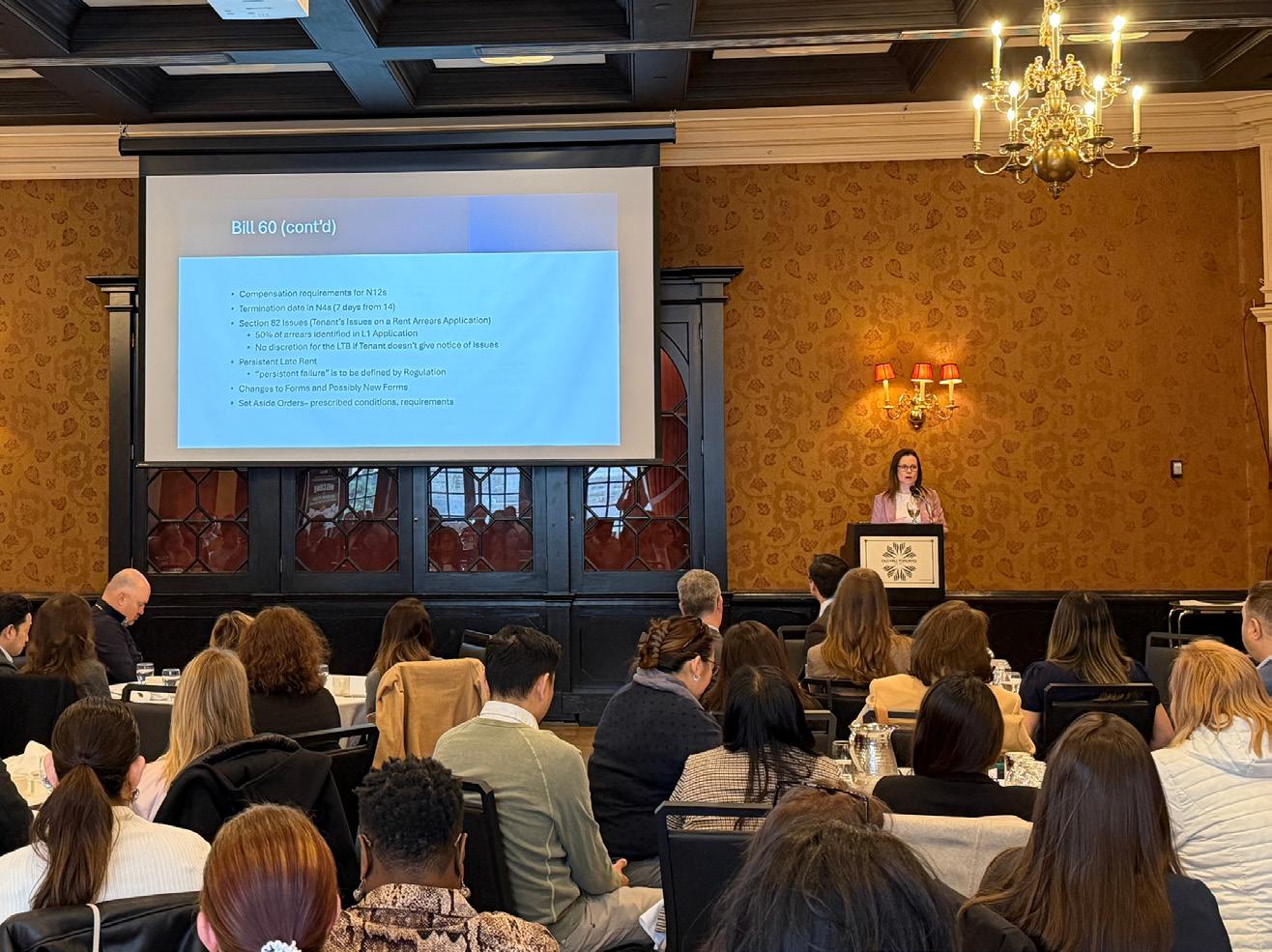
Throughout April, FRPO was pleased to welcome members to our annual Residential Tenancies Act Sessions. This year’s program saw strong participation across both our virtual webinars and in-person seminar, bringing together rental housing professionals from across Ontario for timely education on the RTA, along with valuable, engaging networking opportunities.
A sincere thank you to everyone who contributed to the success of this year’s RTA Sessions. We appreciate our speakers for generously sharing their expertise, and our members for their strong participation and continued support. We look forward to welcoming you to more FRPO educational events in the months ahead
Our 2026 program featured an exceptional group of legal presenters, delivering practical information on today’s relevant RTA topics. We were pleased to welcome Kristin Ley and Kevin Kok of Cohen Highley LLP, Douglas Levitt of Levitt Di Lella Duggan & Chaplick LLP, and Jonathan Marun-Batista of Aird & Berlis LLP. Their extensive knowledge and presentations made this one of the best year’s yet.
CAPITAL INSIGHTS ON RENTAL HOUSING, DELIVERED FROM THE NATION’S CAPITAL
By Sheryl Erenberg, President, Sheryl Erenberg & Associates
This year’s Rental Housing Canada Conference, held this past May in Ottawa, was a veritable treasure trove for anyone in the rental housing industry. Spanning three full days, the conference was packed with product and service ideas from local developers, insights from industry experts, analyses of various markets, and predictions as to where the industry as a whole may be headed. It was also a great opportunity to catch up and network with industry colleagues.
A tale of three communities
The ever-popular building tour led attendees through three different communities. Our first stop was Minto’s 88 Beechwood, where 12 neglected legacy walk-ups were purchased and demolished in 2021 and replaced with 227 completed units by June 2024. The building’s suite mix is 8% studios, 50% onebedroom, and 42% two-bedroom or two-bedrooms plus den, with higher floors enjoying upgraded finishes such as heated ensuite bathroom flooring. While Beechwood’s finished product was quite impressive, the backstory was equally so. Though the City of Ottawa does not require builders to create “replacement suites” for displaced tenants, Minto staff went a step further by working with social service providers to create a robust relocation program for all legacy residents impacted.
At Relevé by Centurion, we toured the two curvy towers [23 and 29 storeys] located just a block from the Ottawa LRT station. Here, the 567 suites situated atop convenient ground-floor retail share amenities that are expansive and impressive: an outdoor infinity pool, a fitness with TRX room, a karaoke room, a golf simulator, a co-working space, a BBQ area with multiple outdoor covered lounges, and several guest suites. 10% of the inventory is designated “affordable,” and short-term rentals are available. As an incentive for longer-term prospects, up to three months’ rent is being offered on two-year lease terms.
Finally, at 360 Laurier West by CLV Group, we toured some incredibly unique floor plan designs. The original building was converted from office to residential use, so the architects had to get creative while working within a fixed floor template. Hats off to Andrew Reeves, Principal Architect at Linebox Studio: his team created 139 units over 11 storeys [studios, one-, and twobedrooms]. The construction began in 2024 and was completed in late 2025 – about half the time it takes to build from scratch. The finished building features the usual variety of amenities along with some thoughtful additions: an outdoor dog run, a hobby room, and on-site auto sharing. Two bicycles were parked in the lobby, available for any resident to borrow. Both the Concierge desk and the Leasing Agent desk were conveniently located in the open lobby – not only as a convenience to residents but also so that the two “service” positions could easily spell each other off when one stepped away.
What’s hot and what’s not in 2026
Storage lockers are hot. Infrequently used yoga rooms are not. Co-work spaces are hot and always booked. Dog runs, bike-sharing, and video intercom consoles are hot [especially with facial recognition feature]. Interestingly, 24/7 concierges are not.
Tips to draw in new residents and help keep current ones happy
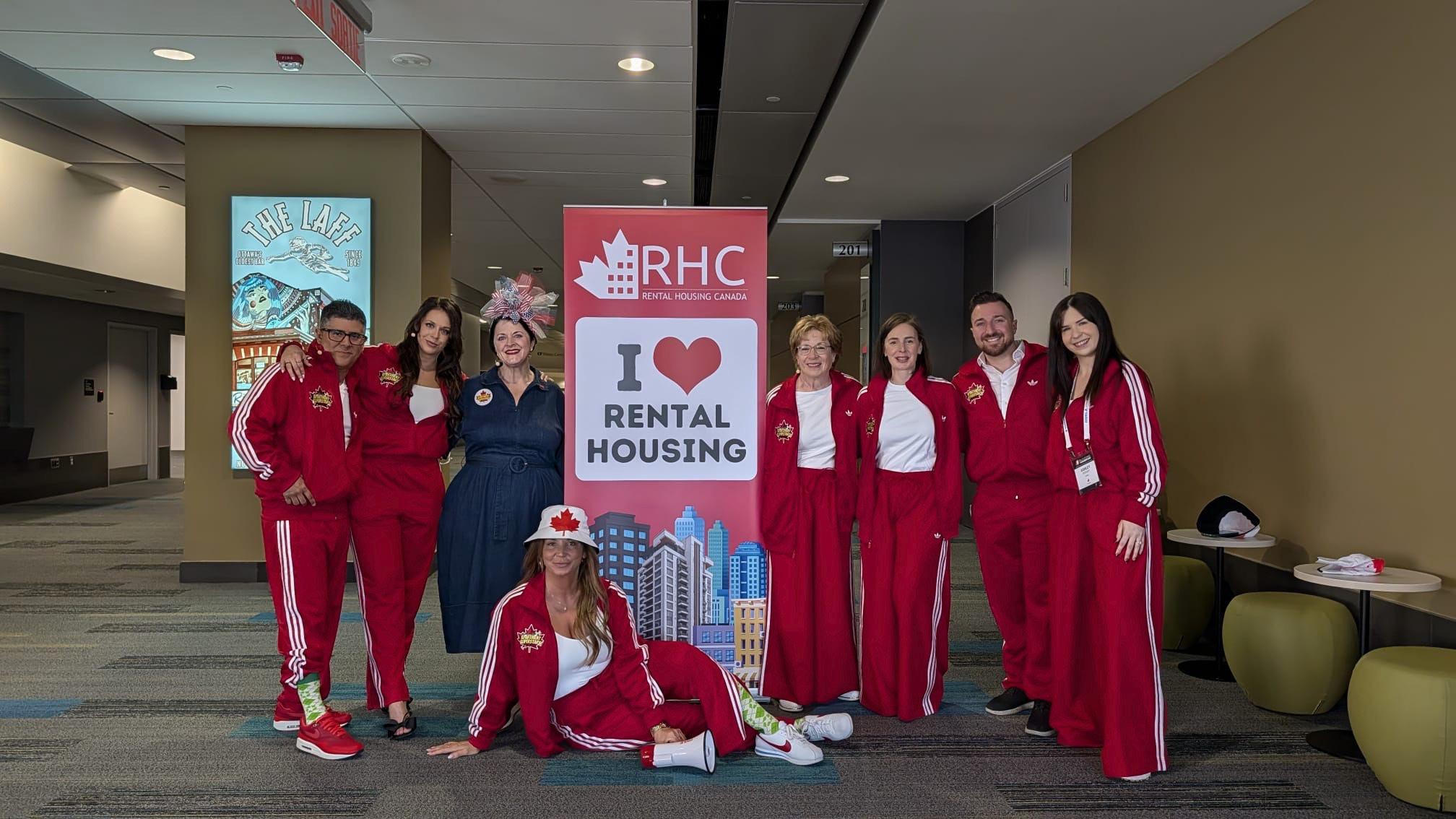
At the Great Canadian Apartment Superstars session, Virginia Love of Entrata shared that the vast majority of entrepreneurs who get deals on the Shark Tank enter smiling and waving. She suggested having leasing agents do the same as a way to help close the deal!
Superstar Jose Rivera of CAPREIT showed landlords how to enlist their residents [via contests] to beef up content on reviews. CAPREIT residents often create their own building events by offering their expertise to their neighbours [such as bike repair sessions].
Virginia suggested a “cool” idea to use when touring prospects in the heat of summer: instead of giving the prospect an ice cream treat in the office, give them an entire tub of ice cream from a local creamery. That way, they will go directly home without visiting other properties so that their ice cream doesn’t melt!
From Superstar Renee Bourgon: Leasing agents should change up their tours to keep them fresh. Start from a different point than you would ordinarily, on every other tour. This will get you off “autopilot.”
Brooklyn Lewandowski reminded everyone to e-shop their building. Start with the website and test every link to ensure the messaging is up to date. Walk through every step as if you were a prospect.
Ian Longo shared some low-budget resident programs/ events such as a walking club or simply promoting other groups’ events in your neighbourhood. It’s a great way for residents to build community and even spread the word about the great building they live in!
Think about attending next year’s RHC conference in Toronto. Planning is underway, and dates will be confirmed soon. It’s a fun way to get inspired by the country’s best in the rental housing sector!
360 Laurier West lobby
Great Canadian Apartment Superstars
MAKING EVERY SQUARE FOOT COUNT: WHAT ONTARIO RENTAL PROVIDERS SHOULD KNOW ABOUT SPACE CONVERSIONS
By Paul Artuso, Marketing Director, PAC Building Group
Ontario's housing conversation tends to fixate on new units, and that matters. But for rental providers managing existing assets, there's a parallel opportunity that's easy to overlook: making the space you already have work harder. Underused parking, tired retail frontage, oversized lobbies, and dead storage all carry cost without pulling their weight. Converting them, not only into new suites but into the amenities today's renters actually pay for, is one of the most direct ways to lift performance and resident satisfaction.
A clear-eyed look at the market
According to CMHC's 2025 Rental Market Report (released December 2025), the national vacancy rate for purpose-built rental apartments rose to 3.1%, up from 2.2% a year earlier, now above its 10-year average. In the Greater Toronto Area (GTA), the purpose-built apartment vacancy rate climbed to 3%.
For rental providers, rising vacancy isn't a reason to pause. It's a reason to invest. When units leased themselves, amenities were optional. Now that tenants have choices, the buildings that stay full and hold their rents are the ones that offer something better: modern fitness space, co-working lounges, reimagined lobbies, right-sized retail. In a normalizing market, the quality of your space is your competitive advantage, and converting the square footage you already own is the fastest way to get there.
Why space optimization is back on the table
Several forces are converging. Policy direction continues to favour intensification: Ontario's More Homes Built Faster Act (Bill 23) permits up to three residential units per lot asof-right in many serviced residential areas, making it easier than ever to add suites where it makes sense. At the same time, demand within buildings is shifting, as surplus parking (with car ownership softening in transit-rich areas), underperforming ground-floor retail, and single-purpose amenity rooms increasingly fail to match how residents live. And amenities now drive performance in a way they once didn't: fitness, co-working, and social space have moved from nice-to-have to table stakes, directly supporting rent premiums, retention, and faster lease-up.
More than new suites: the spectrum of conversions
Space optimization isn't a single move. Depending on the asset, the highest-value conversion might be:
• New residential suites: Carving rentable units out of underused common or commercial space
• Amenity and lifestyle space: Fitness studios, co-working lounges, and resident social areas that strengthen the building's competitive position
• Right-sized commercial: Reconfiguring or repurposing retail that no longer performs
• Reclaimed parking and storage: Converting surplus stalls or dead storage into usable, revenuesupporting space
The common thread: each turns a liability (space that costs money to hold) into something that earns its keep.
What a real feasibility study should answer
Done well, a feasibility study isn't a reason to hesitate. It's how owners confirm the upside before committing capital. The advantage of conversion is structural: you keep the elements that are most expensive to build from scratch, including the foundation, structure, and envelope, and put space you already own and maintain back to productive use. With no land to acquire and, in many cases, an as-of-right path under Ontario's planning framework, the economics frequently favour conversion when a building is a genuine candidate. A solid assessment answers five questions:
1. Planning and approvals pathway: Is the intended use permitted today? Often it is: many amenity and residential conversions fit within existing as-of-right permissions, which avoids a rezoning. Where a variance or zoning change is required, the study maps the realistic timeline so there are no surprises.
2. Building code and life safety: A change of use typically triggers Ontario Building Code provisions: fire separations, exiting, ventilation, accessibility. These
are routine, well-understood requirements, and identifying them early is what keeps a project on schedule and on budget.
3. Structure and envelope: Parking, commercial, and amenity areas were built to different standards for loading, acoustics, and moisture. A structural and envelope review confirms what's reusable up front.
4. Building systems and constructability: A new use means new or re-routed mechanical, electrical, plumbing, and fire protection. Sequencing this in an occupied building is achievable with an experienced team whose job is to price and phase it accurately so the path to delivery is clear.
5. A realistic financial model: The strongest pro formas pair scopespecific costs with the value the conversion unlocks: new rent, an amenity that lifts the building's positioning, or both. Where new rental units are added, CMHC's MLI Select (reduced premiums, up to 95% loan-to-value, amortizations up to 50 years) can materially improve project cash flow.
Construction in an occupied building: Where projects win or lose
Most space conversions happen in buildings that stay fully occupied throughout the project, so the practices that reduce risk all come back to managing the live environment well. Clear resident communication and disruption planning set expectations early. Thoughtful phasing isolates work zones and protects egress, while disciplined dust and noise control, safe access management, and predictable service-interruption windows keep daily life livable for residents. Underpinning all of it is a general contractor with demonstrated occupied-building experience.
Choosing a construction partner for conversions
Conversion work combines technical constraints with stakeholder complexity: tenants, property management, inspectors, and utilities. When screening a general contractor, ask for:
• References from occupiedbuilding conversion or retrofit projects
Sources
• A sample phasing plan and tenant-communication process
• Their approach to safety and site controls in live environments
• Clarity on scope inclusions and exclusions (interior fit-out vs. base-building upgrades)
Project spotlight: Maddox Tyndall
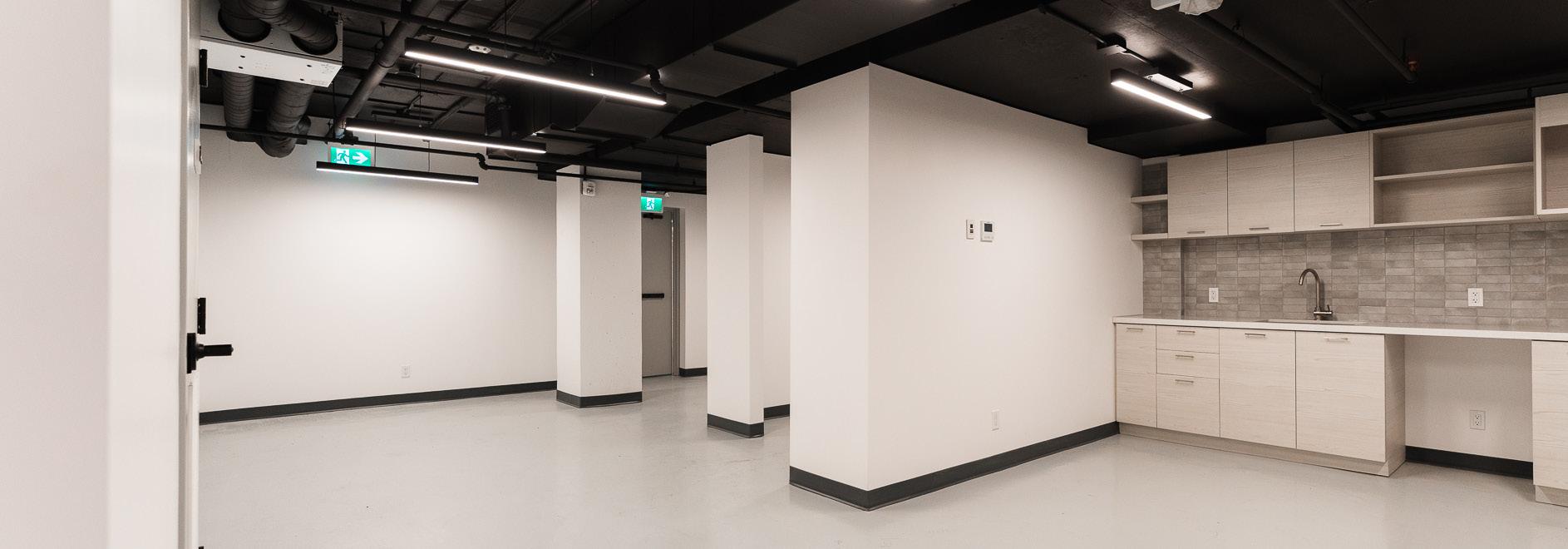
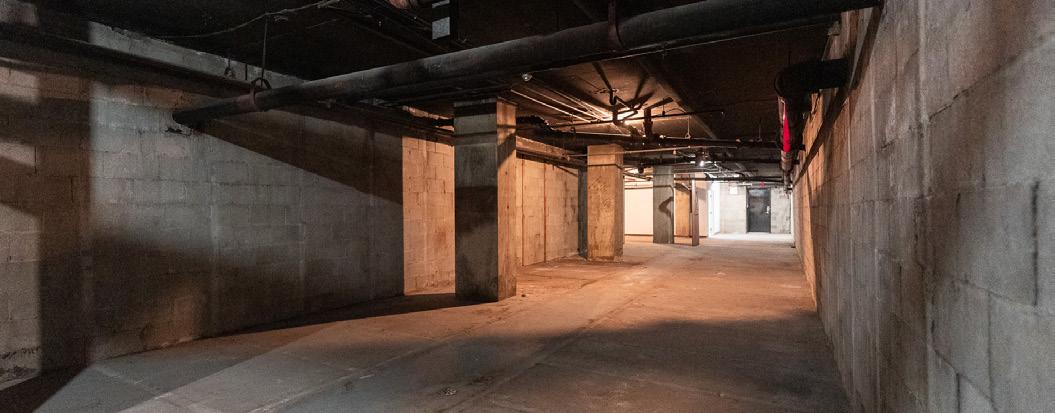
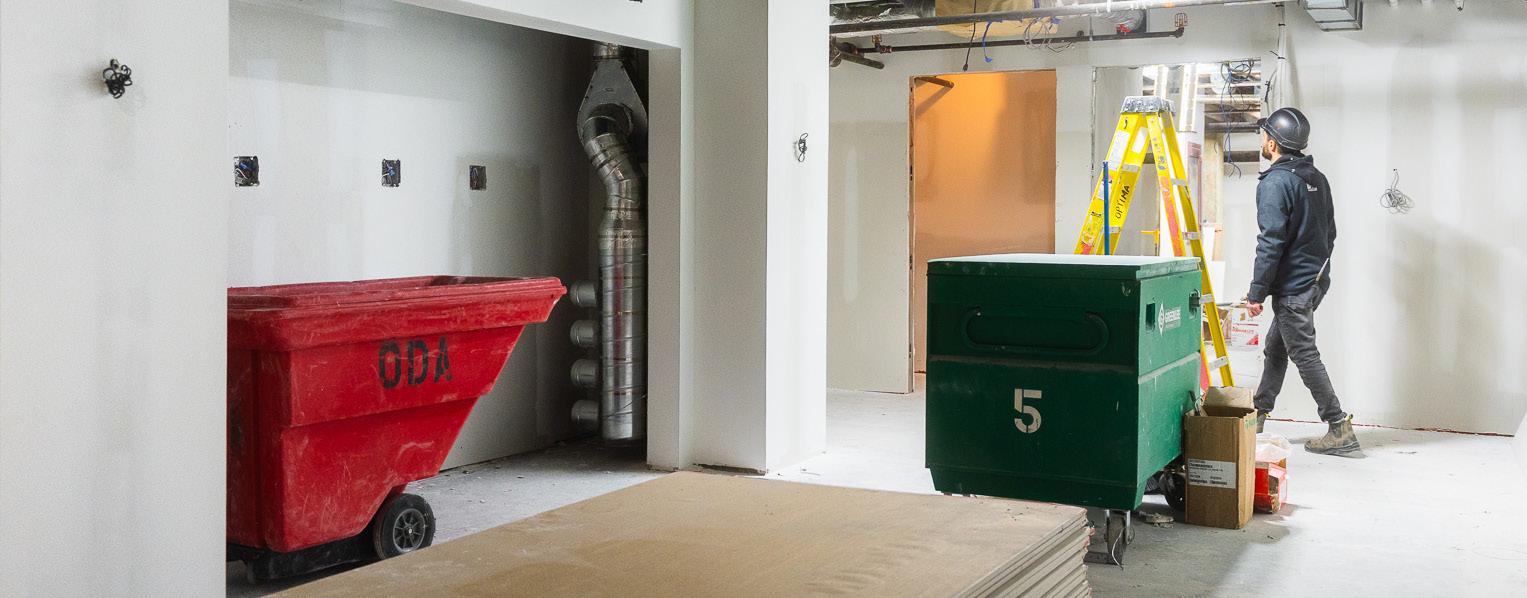
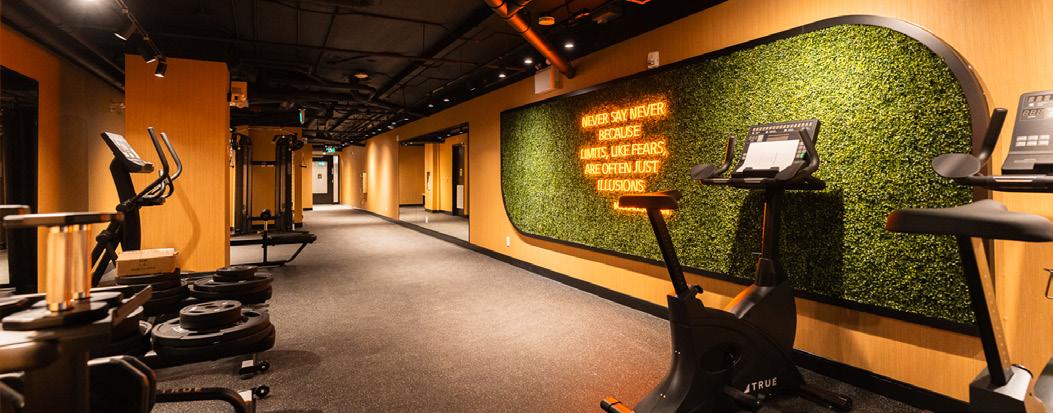
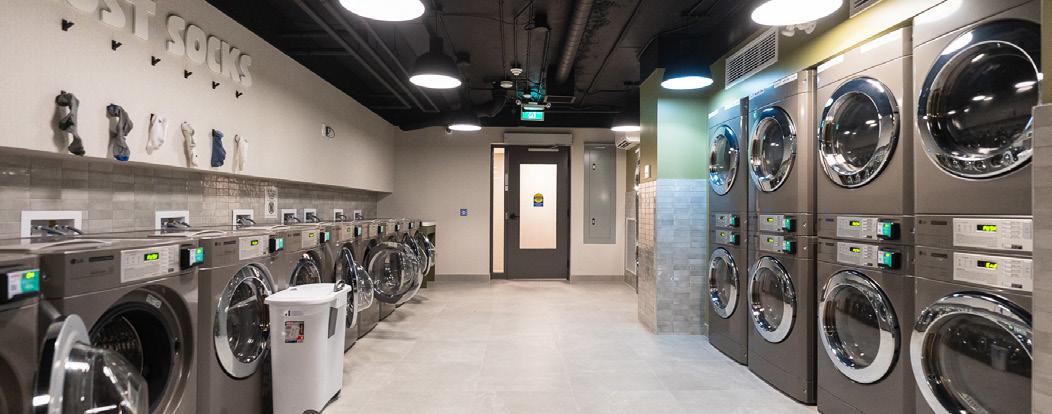
These principles aren't just theoretical. At Fitzrovia's Maddox Tyndall (135 Tyndall Avenue), an occupied 11-storey rental building, PAC Building Group worked with fellow FRPO member Fitzrovia to convert roughly 3,800 sq. ft. of underused below-grade storage and locker areas into a new resident amenity floor. What had been dark, raw concrete now holds a fitness studio with a living green feature wall, a redesigned residents' laundry lounge, and refreshed corridors and lockers. It's a textbook change of use: high-value amenity space delivered while the building stayed fully occupied. The result is straightforward: underutilized, costheavy square footage becomes space residents value, and a building that competes.
• CMHC, 2025 Rental Market Report (national vacancy 3.1%, up from 2.2%): https://www.cmhc-schl.gc.ca/professionals/housing-markets-dataand-research/market-reports/rental-market-reports-major-centres
• Legislative Assembly of Ontario, Bill 23, More Homes Built Faster Act, 2022: https://www.ola.org/en/legislative-business/bills/parliament-43/ session-1/bill-23
• Environmental Registry of Ontario, Additional Residential Units (up to 3 units per lot): https://ero.ontario.ca/notice/019-6197
• CMHC, MLI Select (reduced premiums, up to 95% LTV, up to 50-year amortization): https://www.cmhc-schl.gc.ca/professionals/projectfunding-and-mortgage-financing/mortgage-loan-insurance/multi-unit-insurance/mliselect
Before and after: Underused below-grade storage and locker space, reimagined as a resident fitness studio.
Before and after: The below-grade level mid-conversion, and the finished residents’ laundry lounge at Maddox Tyndall (Fitzrovia). Photos: Arterra Marketing.
Contributing to the Well-Being of Canada’s Housing System
Contribuer au bon fonctionnement
du système canadien de
logement
CMHC plays a critical role as a national facilitator to promote stability and sustainability in Canada’s housing finance system. Our mortgage insurance products support access to homeownership and the creation and maintenance of rental supply.
In addition, CMHC actively supports the Government of Canada in delivering on its commitment to make housing more affordable. CMHC research and data help inform housing policy.
By facilitating cooperation between all levels of government, private and non-profit sectors, we contribute to advancing housing affordability, equity and climate compatibility.
La SCHL joue un rôle essentiel de facilitateur national pour promouvoir la stabilité et la durabilité du système de financement de l’habitation au Canada. Ses produits d’assurance prêt hypothécaire favorisent l’accès à la propriété et contribuent à la création ou au maintien de l’offre de logements locatifs.
De plus, la SCHL appuie activement le gouvernement du Canada dans la réalisation de son engagement à accroître l’abordabilité du logement. Ses recherches et ses données aident à éclairer les politiques en matière de logement.
La SCHL facilite la coopération entre tous les ordres de gouvernement, le secteur privé et le secteur sans but lucratif. Ce faisant, elle contribue à faire progresser l’abordabilité et la compatibilité climatique du logement, ainsi que l’équité en matière de logement.
Sign up for CMHC’s Housing Updates and stay informed.
Abonnez-vous aux mises à jour sur le logement de la SCHL et tenez-vous au courant.
RESILIENCE STARTS AT THE BUILDING LEVEL
By Jonathan Fleischer, Chief Operating Officer, Equiton Living
Across many Canadian markets, rental housing providers are navigating an evolving landscape shaped by new supply, affordability pressures, shifting resident expectations, and higher operating costs. While those market forces matter, for property managers, the focus always comes back to the things we can control.
The quality of the day-to-day resident experience, the responsiveness of our teams, and the condition of our buildings: these are all areas where strong operators can make a real difference.
That mindset is also where environmental, social, and governance (ESG) considerations become practical. For rental housing providers, ESG outcomes are closely tied to the everyday decisions that shape how buildings are managed, maintained, and improved over time.
ESG as active management
In purpose-built rental housing, ESG often shows up through everyday operational decisions. Energy-efficient lighting, water conservation, waste management practices, building system upgrades, resident communication, preventative maintenance, and staff training all contribute to stronger building performance. These initiatives also tend to support the business case for better-managed communities. A more resourceefficient building can help manage operating costs. Better-maintained common areas and suites can support resident satisfaction. Faster communication and clearer service standards can improve the resident experience. Over time, those factors can contribute to retention, reputation, and physical asset resilience.
The strongest improvements are usually the ones that make sense from more than one perspective. An upgrade should support the building, support the resident experience, and support long-term performance. Those goals are very often aligned.
Certification as a portfolio framework
Certification programs can help bring structure to that work. For example, FRPO’s Certified Rental Building Program and Living Green Together program provide recognized standards that can help support a broader framework for consistency across multiple communities.
The Equiton Apartment Fund (Equiton Residential Income Fund Trust) offers a notable example of how this approach in action. In 2025, Equiton pursued and achieved Certified Rental Building Program and Living Green Together status across 33 properties, demonstrating a portfolio-wide commitment to operational excellence, resident-focused management, and environmental stewardship. By adopting recognized standards at scale, the organization has sought to create greater consistency in how its communities are managed while reinforcing its broader ESG objectives.
Building from the ground up
New purpose-built rental development provides an opportunity to embed these principles from the beginning.
Maison Riverain, Equiton’s rental development project in Ottawa, is a strong example. The first of its three planned towers has been completed and achieved Certified Rental Building Program and Living Green Together status, reflecting a development approach shaped by long-term operations, resident experience, and sustainability. That includes the physical design of the community, the quality of shared spaces, and the operational systems that support residents after move-in.
For new buildings, ESG starts with design choices, but it is sustained through management. A property can be thoughtfully built, but its long-term performance depends on how it is operated year after year.
Resilience through execution
Rental housing is a long-term asset class, and market conditions will change over time. Resilience comes from consistent execution: investing in buildings, supporting residents, managing expenses carefully, and using recognized standards to hold teams accountable. For rental housing providers, ESG and operational performance are increasingly connected. Well-run buildings, responsible environmental practices, and a strong resident experience all contribute to building communities and portfolios that are better positioned to perform through changing market conditions.
Affordable Housing Multi-Residential Program
The Affordable Housing Multi-Residential Program offers incentives for energy assessments and high-efficiency equipment, along with free in-suite upgrades that lower energy use† and improve resident comfort. Municipal and social housing, shelters, co-ops and eligible private marketrate multi-residential buildings can qualify for incentives. Incentives for building upgrades can include:
• Boiler optimization
• Building automation controls
• Variable frequency drives
• Water heaters
• Free heat reflector panels
By Jordan Nanowski, Lead Economist (GTA), Canada Mortgage and Housing Corporation
CMHC has released its 2026 Mid-Year Rental Market Update, offering new insights into rental conditions across Canada, using alternative data sources and market intelligence from industry experts to build upon our latest Rental Market Report. The following is a condensed version of the report, with a focus on Torontospecific insights.
Highlights
• Asking rents declined due to increased supply and slower population growth.
• Vacancy increases are mostly concentrated in new supply, where landlord-provided incentives support absorption.
• Rental markets are easing as new completions take longer to absorb, while competition from rental condominium apartments in certain markets is creating a short-term imbalance between supply and demand in new, higher-priced segments.
• Conditions remain very tight in the lowest rent quartiles in most markets, implying little improvement in affordability in this segment.
• Tenant mobility is highest in more expensive units and more limited in lower-rent segments, despite recent gains in turnover.
• Rental demand is expected to grow, even with much lower population growth.
Asking rents decline due to rising supply and slowing demand
Asking rents1, the rents advertised for available units, are continuing to decline in Toronto, Vancouver and Calgary. However, declines were less pronounced in Q4 2025 compared to a year ago (Figure 1).
In major markets, landlords report that increased competition from new supply is the primary driver of lower asking rents. In Toronto and Vancouver, they also pointed to increased competition from a surge in newly completed condominium apartments rented out, many of which couldn’t be absorbed in the ownership market. Supply is now outpacing demand for these new units.
In response, landlords increasingly rely on incentives to attract tenants, along with lowering asking rents. Market
Source:
intelligence suggests these incentives have intensified over the past six months, reaching as high as several months of free rent. They now often include:
• Free or discounted parking
• Gift cards
• Move-in credits
• Cash bonuses Landlords continued to increase rents paid on occupied units
The average rents paid by all tenants continued to increase, driven mainly by higher rents at turnover. In markets with persistently low turnover and rent increase guidelines, landlords are still able to significantly increase rents once a unit becomes available.
In the first quarter of 2026, two-bedroom units continued to post average rent increases compared to a year ago, apart from Toronto where gains remained modest.2
Higher vacancies in newly completed units
Rental apartment completions in early 2026 are tracking above the same period in 2025. According to CMHC’s Rental Market Survey, vacancies were highest in structures built after 2020 and in units located near post-secondary institutions. In contrast, older stabilized buildings and family-sized units continue to experience tighter market conditions. Market intelligence suggests this trend has intensified since our fall survey.
Certified Rental Building (CRB) Program
FRPO is pleased to welcome Emma Kulmatycki as the new Program Coordinator for the Certified Rental Building™ (CRB) Program.
In this role, Emma will support the continued growth of the program by coordinating certification activities, member communications, audit scheduling, training administration, documentation, and program resources. As CRB expands across Canada, she will help ensure members have the information and support they need throughout the certification process.
Emma is a graduate of Dalhousie University, where she completed a double major in Environment, Society and Sustainability and International Development Studies. Her academic experience included a sustainability capstone project focused on water justice and well water safety for rural and Indigenous communities.
Emma brings strong skills in coordination, communications, event logistics, documentation, and process improvement. She has also supported sustainability-focused initiatives, including zerowaste retail operations and community food security programs.
“We’re very excited to have Emma join the CRB team,” said Dilan Cetinkaya, Director of Certification. “Her sustainability background, strong organizational skills, and thoughtful approach to stakeholder support will be a great asset as we continue expanding the program and strengthening the member experience ”
Welcome to the team!
Kulmatycki
Managing insurance risk in aging rental assets
As Ontario’s purpose-built rental buildings continue to age, the conversation around insurance is shifting from simply securing coverage to demonstrating strong operations, documentation, and long-term risk management.
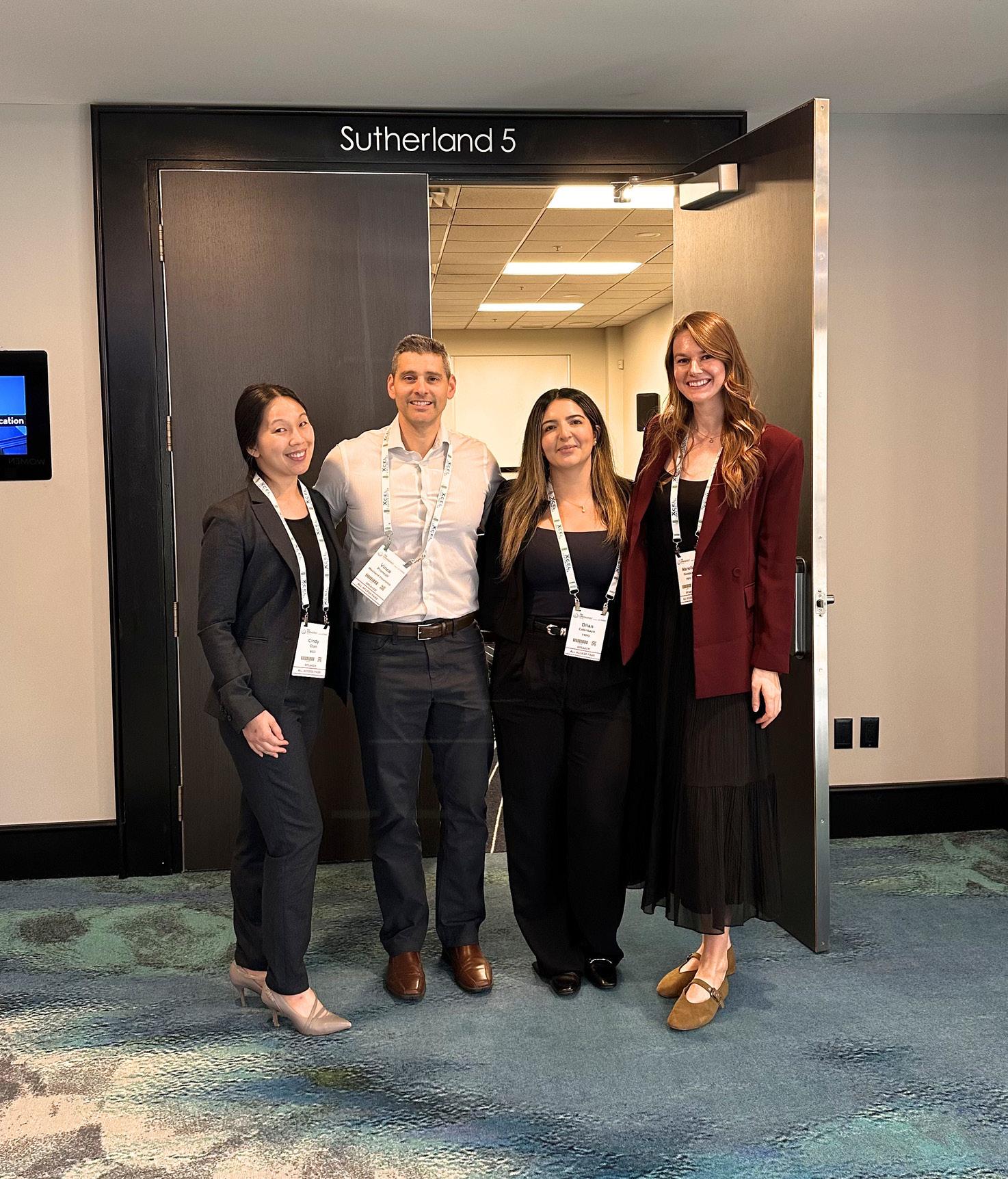
At PM Springfest, FRPO’s Marielle Hossack, Director of Policy and Regulatory Affairs, and FRPO CRB Program’s Dilan Cetinkaya, Director of Certification, joined Cindy Chan, Director, Risk Management and Insurance at BGO, and Vince Pronesti, Senior Account Executive at Westland Insurance, for a panel discussion on strengthening the insurability and performance of aging rental housing assets.
The session explored how insurers assess risk and what providers can do to position their properties more effectively during underwriting. Panelists emphasized proactive management, strong documentation, ongoing maintenance, and capital planning, noting that insurers closely evaluate inspection records and risk mitigation practices
The Certified Rental Building™ Program was highlighted as a tool that supports documentation, compliance, maintenance, and third-party audits. The discussion also noted that fire- and waterrelated incidents remain among the most significant risks facing rental housing providers Tenant insurance was also identified as an important component of a broader risk management strategy. Well-documented, wellmaintained buildings are better positioned to build insurer confidence, demonstrate due diligence, and support long-term asset performance. The panel also underscored that improving insurability is increasingly tied to demonstrating consistency in day-to-day operational practices across entire portfolios
Emma
As a result, there is a short-term imbalance between supply and demand in new, higher-priced segments. Rental operators are reporting that new units are taking longer to rent. In some cases, it can take months to fill a vacant unit.
Competition from investor-owned rental condominium apartments, which is higher than usual, is further slowing absorption in larger markets. While currently a significant factor, this source of competition will decline in the coming years as condominium apartment completions are projected to fall sharply.
This is providing renters with more choice and some negotiating room. Although average rents continue to increase on occupied units and at turnover, current vacancy levels suggest more balanced conditions in Canada’s largest rental markets. Asking rents are also easing, which supports this view.
Supply growth resulting in some relief for new renters amid ongoing affordability strain
In Q1 2026, affordability for existing tenants3 has worsened across most key markets as compared to a year ago. Edmonton and Toronto are the exceptions, where a combination of slower rent growth due to higher supply and strong wage growth has led to improved affordability.
This upward movement in average rents contrasts with improving conditions for tenants signing new leases. Asking rent-to-income ratios generally declined across most major CMAs. This was driven primarily by stalling or declining asking rents responding to softer leasing conditions. The most pronounced drops were in Vancouver, Toronto, Calgary and Edmonton. Vancouver and Toronto ratios are now back to pre-pandemic levels. This improvement suggests that recent supply growth is resulting in modest affordability gains and more options in select market segments.
Tenant mobility remains uneven across rent quartiles
CMHC’s Rental Market Survey indicates vacancy rates have risen across all rent quartiles. Meanwhile, rental operators are reporting greater competition from new developments and tenants more willing to move for incentives. This suggests that new high-end supply was drawing in higher-income renters and potentially freeing up lower-priced units.
Overall, our analysis shows that tenant turnover was the highest among the most expensive rent quartiles, and much lower for the most affordable rent quartiles. Between 2024 and 2025, turnover rates did generally increase in lower rent quartiles. However, vacancy rates remained very low, and conditions varied by market (Figure 2). In Toronto and Vancouver, vacancy and turnover increased across most rent quartiles. Pressure
remained in the lowest segments, particularly in the persistently tight first-quartile. This suggests limited downward filtering of new supply.
Figure 2: Turnover rate highest among most expensive units
Overall turnover rate by rent quartile, select CMAs, 2025
Despite weak population growth and elevated unemployment rates, rental demand in major cities is expected to be supported by:
• Improving affordability for new tenants
• Return-to-office trends
• Large young-adult cohorts seeking independence
Household formation will continue in 2026 (Figure 3). It will be led by younger cohorts, who are more likely to rent. This is especially true amid economic uncertainty and lower costs compared to ownership. Notably, easing housing costs are expected to support growth in Toronto and Vancouver. This will enable previously suppressed households to form.
Figure 3: Household growth expected to continue Growth in household numbers by source, 2026, select CMAs
Source: CMHC Integrated Housing Model
3 Calculated using Statistics Canada’s Labour Force Survey rents for 2-bedroom units (as of Q1 2026) and the combined income of two average earners aged 25 to 34.
4 Calculated using Statistics Canada’s asking 2-bedroom rents (as of Q4 2025) and the
of two
AI AND AUTOMATION FOR PROPERTY TEAMS: A PRACTICAL GUIDE FOR 2026
By Dami Akingbola, Marketing Coordinator, Telelink
Property management depends heavily on people, but many organizations unknowingly have their people buried under repetitive administrative work that pulls them away from the parts of the job where they add the most value.
Even when teams use AI, they often use it in the most basic way: typing prompts, asking for a better email, or trying to get a stronger response from ChatGPT, Claude, or Copilot.
Using AI only for basic prompting is like having a smartphone and only using it to make phone calls. It works, but it misses most of what the tool was built to do.
In 2026, AI and automation can do more than help teams write better. They can organize information, support repeatable workflows, improve follow-up, and reduce the manual tasks that quietly consume hours every week.
Here are a few tools worth exploring and how property teams can use them in practical, low-risk ways.
Claude for documents and co-working
Claude is useful for property teams that work with long documents, policies, reports, spreadsheets, and planning materials.
It can summarize dense information, compare documents, extract key points, analyze spreadsheets, create action plans, and turn rough ideas into practical templates. With Claude’s built-in workspace features, teams can also create simple dashboards, process
maps, checklists, internal guides, spreadsheet-style trackers, and visual layouts that can be reviewed and refined as they work.
For property teams, this could mean building a maintenance escalation workflow, a resident communication checklist, an after-hours call handling guide, an inspection tracker, or a summary of recurring issues across a portfolio.
The goal is not to replace staff expertise. It is to help teams move from scattered information to a useful first draft faster.
Scribe or Tango for process documentation
Some of the most important knowledge on a property team lives in someone’s head: how to update a tracker, complete a report, process a request, organize a file, or follow an internal workflow.
Tools like Scribe or Tango can help turn those everyday processes into step-by-step guides. A staff member simply records their screen while completing a task, and the tool creates a process document with screenshots and
For property teams, this can be useful for documenting inspection processes, maintenance tracking steps, move-in or move-out workflows, reporting tasks, leasing follow-ups, or internal administrative procedures. Instead of explaining the same process repeatedly, teams can build a simple library of guides that staff can return to when needed. This can support onboarding, reduce confusion, and make recurring work easier to follow.
HeyGen for training and communication videos
HeyGen can help teams turn written scripts, slides, or ideas into AIgenerated videos with narration, captions, visuals, and avatars. This can be useful for explaining routine information clearly, especially when the same instructions need to be shared more than once.
At Telelink, we have used HeyGen for policy announcements, learning and development training, and onboarding support for new account launches. Using avatars has made it easier to create these videos
ENGINEERING RESTORATION
SERVICES
For property teams, a similar approach could be used to create short videos that explain how to submit a maintenance request, what to do during an after-hours emergency, move-in or move-out instructions, internal training, or standard operating procedures.
As with any AI tool, there may still be limitations depending on what a team wants to create, so outputs should be reviewed carefully for accuracy, accessibility, brand voice, and privacy before they are shared.
Where AI meets automation: Saving hours every week
AI is useful when it helps a person work faster. Automation becomes powerful when it helps a workflow move forward without someone manually pushing every step.
That is where tools like Zapier can help.
Zapier: The invisible assistant that connects your tools
Zapier connects everyday tools like Gmail, Google Forms, SharePoint, Slack, Excel, Notion, and other platforms so they can work together automatically.
Instead of manually moving information between forms, spreadsheets, inboxes, and databases, Zapier can handle simple tasks in the background using automations called Zaps.
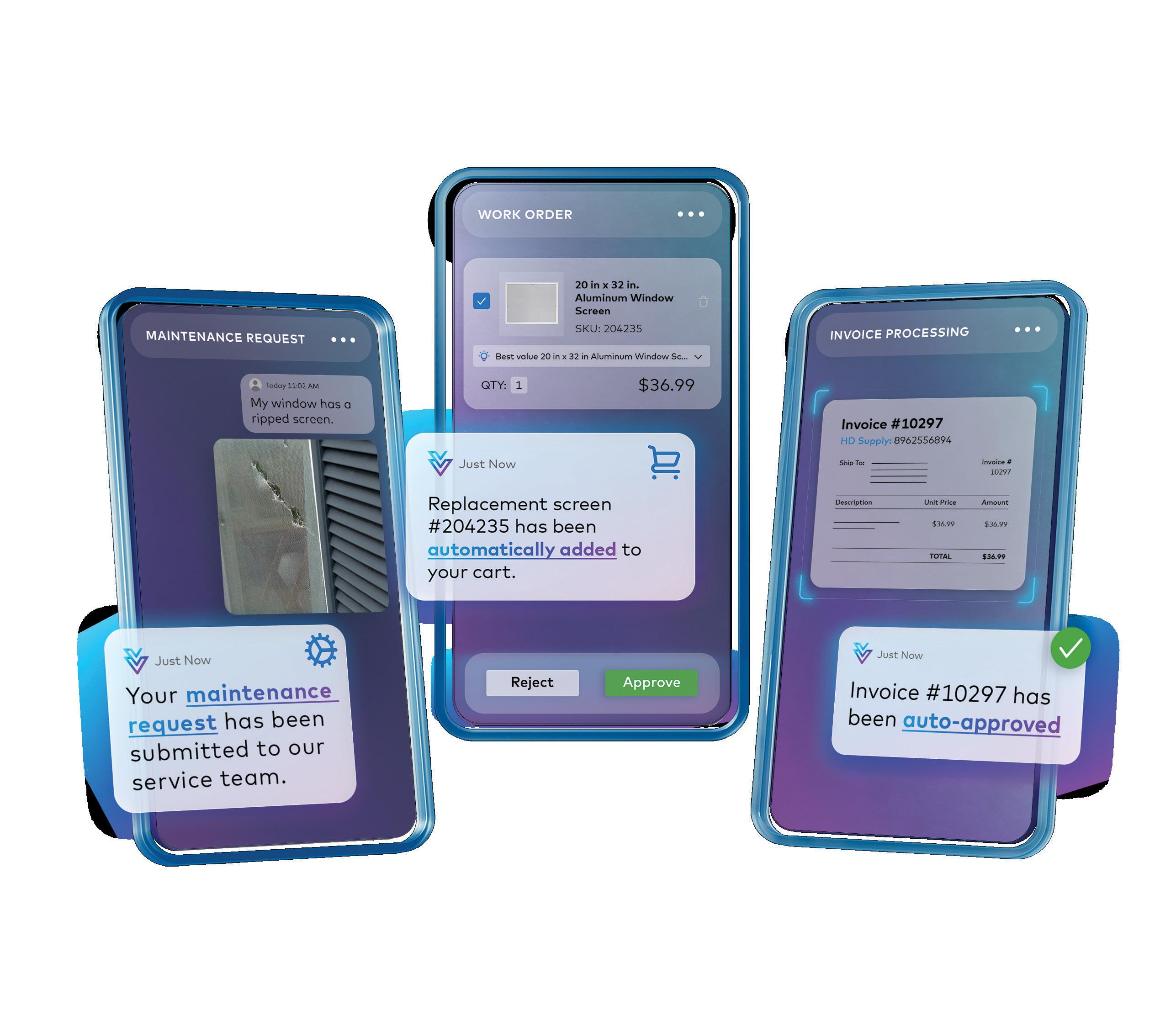
For example, when a resident submits a maintenance request form, Zapier can notify the right staff member, log the request in a tracker, and send a confirmation message to the resident.
Property teams can also use automation to log inquiries, organize documents, add applicants to a follow-up list, send internal reminders, or create a simple record of recurring maintenance issues.
For teams managing multiple buildings, high request volume, after-hours communication, or recurring reporting needs, automation can create more consistency and give staff valuable time back.
Start small and stay practical
Zapier works through simple logic: if this happens, then do that.
A simple Zap could look like this:
A resident completes a maintenance request form.
The form response is added to a tracker.
The appropriate staff member receives a notification.
The resident receives a confirmation email.
The best starting point is not to adopt every new tool. It is to identify one recurring workflow that slows your team down, then test whether AI or automation can make it faster, clearer, or more consistent.
Start with one process, one template, one automation, or one checklist. Review the result, refine it, and decide whether to expand.
Staying current with AI does not have to mean constant research. A practical approach is to assign one person to monitor product updates, test simple use cases, and share what is useful internally.
The goal is not to use AI everywhere. It is to use it where it gives people time back.
The tools mentioned in this article are examples only. Telelink is not affiliated with Claude, Scribe, Tango, HeyGen, Zapier, or any other third-party tool referenced. Before adopting any AI or automation tool, property teams should involve their internal technology, privacy, legal, or compliance teams, especially when handling resident information, personal data, confidential documents, financial information, maintenance records, or internal operational data.
S o m e e x p e r i e n c e s
a r e a t t e n d e d .
O t h e r s
a r e r e m e m b e r e d .
I c r e a t e t h e o n e s
p e o p l e n e v e r f o r g e t b r a n d i c l a r k e C
16
York Street, Suite 1900, Toronto, ON M5J 0E6
20 Upjohn Rd, Suite 103 Toronto, ON, M3B 2V9
900 - 1 Concorde Gate, Toronto, ON M3C 4H9
18 King St E, Suite 1400, Toronto, ON, M5C 1C4
1 York St Suite 1010 Toronto ON M5J 0B6
60 Atlantic Ave., Unit 200 Toronto, ON, M6K 1X9
2001 Sheppard Ave., E., Suite 500, North York, ON M2J 0A1
14 Ronson Drive, Toronto, ON M9W 1B2
91 Pippin Road, Concord, ON L4K 4J9
7500 Martin Grove, Unit #6, Vaughan, ON L4L 8S9
94 Church Street, St. Catherines, ON L2R 3C8
2465 Milltower Crt., Mississauga ON L5N 5Z6
80 Citizen Court, Unit 11, Markham, ON L6G 1A7
4-271B Merritt Street, St. Catherines, ON L2T 1K1
100 University Ave, North Tower, Suite 400, Toronto, ON M5J 1V6
First National Financial LP
Attn: Maria Broekhof T: (416) 593-2913
maria.broekhof@firstnational.ca 6435 Northwest Drive, Mississauga, ON L4V 1K2